0
ReSpeaker 2-Mic Pi HAT V1.0 for Pi
14,500 د.ع
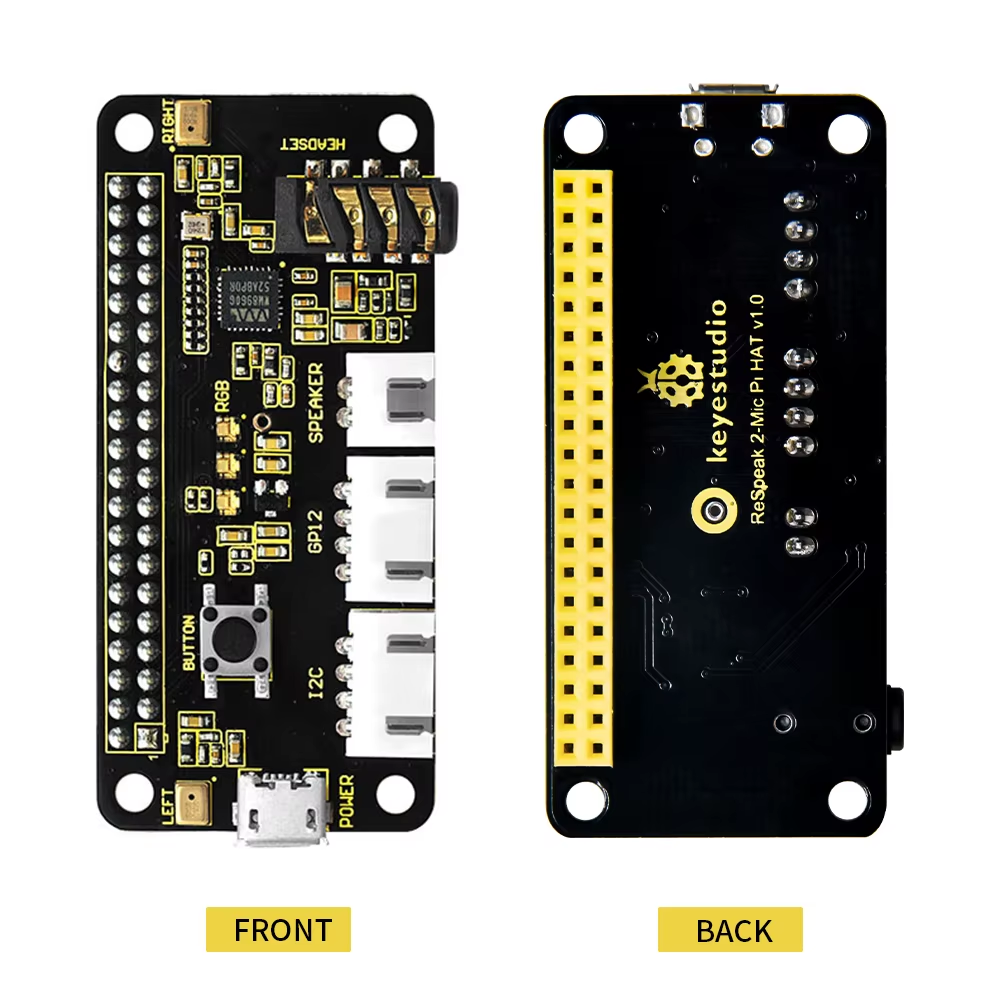
Transform your Raspberry Pi into a powerful voice-controlled smart device with the ReSpeaker 2-Mic Pi HAT V1.0, a professional-grade audio expansion board designed specifically for AI and voice applications. This compact HAT adds dual-microphone capabilities to your Raspberry Pi, enabling seamless integration with voice services such as Amazon Alexa, Google Assistant, and custom speech recognition systems.
In stock
CompareDescription
ReSpeaker 2-Mic Pi HAT V1.0 for Raspberry Pi – Dual Microphone Expansion Board for AI and Voice Applications
Transform your Raspberry Pi into a powerful voice-controlled smart device with the ReSpeaker 2-Mic Pi HAT V1.0, a professional-grade audio expansion board designed specifically for AI and voice applications. This compact HAT adds dual-microphone capabilities to your Raspberry Pi, enabling seamless integration with voice services such as Amazon Alexa, Google Assistant, and custom speech recognition systems.
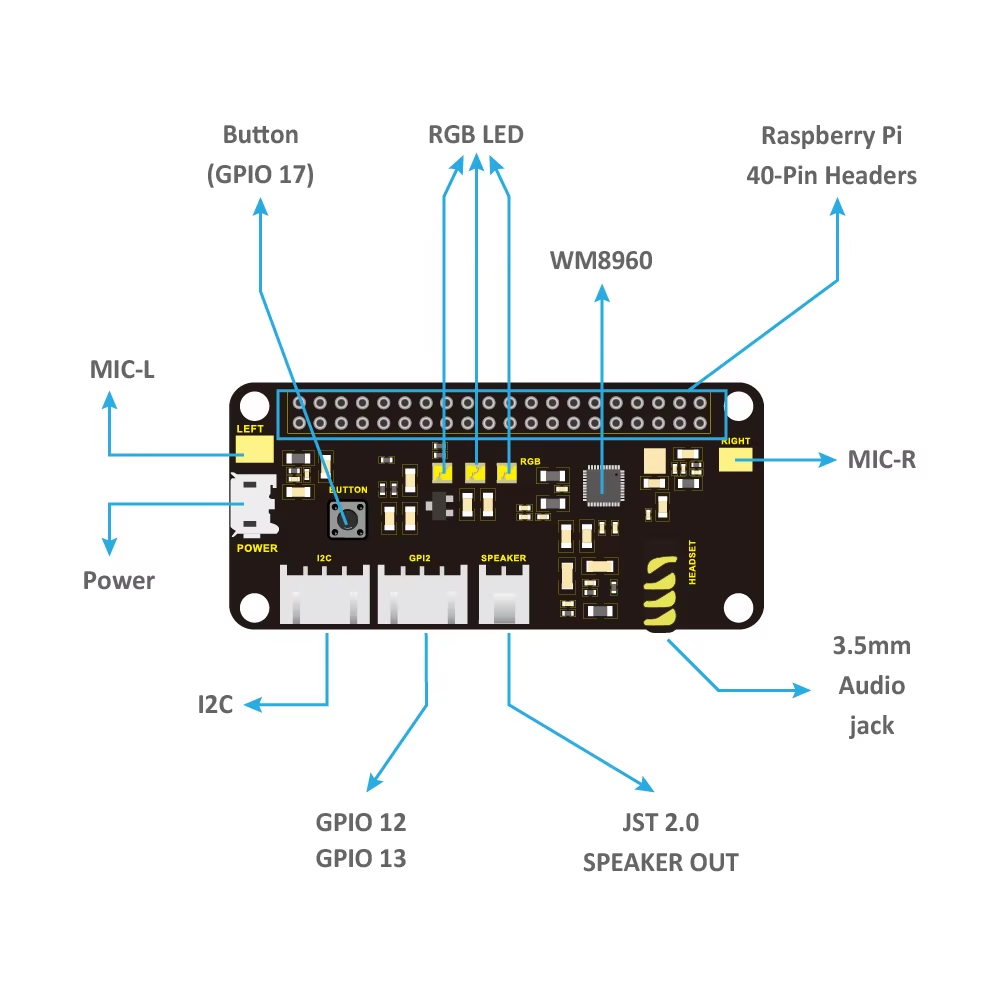
At the heart of the ReSpeaker 2-Mic Pi HAT is the WM8960, a low-power stereo audio codec that delivers high-quality sound processing for both input and output. The board features two microphones positioned on opposite sides, providing effective sound capture for voice commands, far-field voice pickup, and sound localization. For audio output, the board provides both a standard 3.5mm audio jack and a JST 2.0 speaker connector, offering flexible options for headphones, speakers, or external audio systems.
Key Features
Dual-Microphone Array
Features two onboard microphones positioned on both sides of the board for effective voice capture, sound localization, and noise suppression, making it ideal for far-field voice applications.
High-Quality Audio Codec
Powered by the WM8960 low-power stereo codec, providing professional-grade audio processing for both recording and playback with support for sample rates up to 48kHz.
Three Programmable RGB LEDs
Includes three APA102 addressable RGB LEDs that can be programmed for visual feedback, status indication, or decorative lighting effects, adding visual interactivity to your voice projects.
User-Programmable Button
Features a user button connected to GPIO17, allowing you to add physical control inputs such as push-to-talk activation, mode switching, or custom function triggers.
Two Grove Connectors
Provides two Grove expansion ports (I2C and GPIO12/13), enabling easy connection to hundreds of Seeed Grove sensors and modules without soldering, for rapid prototyping and project expansion.
Multiple Audio Output Options
Offers both a 3.5mm audio jack for headphones and a JST 2.0 speaker output for connecting external speakers, providing flexible audio output for voice feedback and media playback.
Wide Raspberry Pi Compatibility
Compatible with Raspberry Pi 4B, 3B+, 3B, 2B, B+, Zero, and Zero W, making it suitable for a wide range of Raspberry Pi models.
Dedicated Micro USB Power
Includes a Micro USB power port for supplying additional current when using speakers, ensuring stable operation even with power-hungry audio output devices.
Specifications
| Parameter | Value |
|---|---|
| Product Name | ReSpeaker 2-Mic Pi HAT V1.0 |
| Compatibility | Raspberry Pi 4B, 4, 3B, 3B+, 3, 2B, B+, Zero W |
| Audio Codec | WM8960 Low Power Stereo Codec |
| Microphones | 2 (stereo, onboard) |
| Max Sample Rate | 48 kHz |
| Audio Outputs | 3.5mm Audio Jack, JST 2.0 Speaker Out |
| User Button | 1 (connected to GPIO17) |
| RGB LEDs | 3 x APA102 (SPI interface) |
| Expansion Connectors | Grove I2C port, Grove GPIO12/13 port |
| Power Input | Micro USB (for speaker power), 5V via GPIO |
| Dimensions | Standard Raspberry Pi HAT form factor |
Pin Configuration
| Component | Raspberry Pi Connection | Function |
|---|---|---|
| User Button | GPIO17 | Push-to-talk or custom function |
| RGB LEDs | SPI Interface | APA102 addressable LEDs |
| Grove I2C Port | I2C-1 | I2C sensor/module expansion |
| Grove GPIO Port | GPIO12, GPIO13 | Digital I/O expansion |
| WM8960 Codec | I2S / I2C | Audio processing |
Wiring Diagram
Hardware Installation
Raspberry Pi GPIO Header ──── ReSpeaker 2-Mic Pi HAT
(Stacked directly on top of Raspberry Pi via 40-pin GPIO header)
Speaker Connection
External Speaker ──── JST 2.0 Connector
or
Headphones ──── 3.5mm Audio Jack
Power for Speaker
Micro USB Power Supply ──── Micro USB Port (provides additional current for speaker)
Software Setup
Step 1: Install Device Tree Overlay
git clone https://github.com/Seeed-Studio/seeed-linux-dtoverlays.git
cd seeed-linux-dtoverlays/
make overlays/rpi/respeaker-2mic-v1_0-overlay.dtbo
sudo cp overlays/rpi/respeaker-2mic-v1_0-overlay.dtbo /boot/firmware/overlays/respeaker-2mic-v1_0.dtbo
echo "dtoverlay=respeaker-2mic-v1_0" | sudo tee -a /boot/firmware/config.txt
sudo reboot
Step 2: Verify Audio Device
aplay -l
arecord -l
Step 3: Test Microphone
arecord -D "plughw:3,0" -f S16_LE -r 16000 -d 5 -t wav test.wav
aplay -D "plughw:3,0" test.wav
Step 4: Adjust Audio Levels
alsamixer
Press F6 to select the “seeed-2mic-voicecard” device, then use arrow keys to adjust volume.
Python Code Example (RGB LED Control)
import spidev
import time

spi = spidev.SpiDev()
spi.open(0, 0)
spi.max_speed_hz = 5000000

def set_rgb_led(led_num, r, g, b):
    start_frame = [0x00, 0x00, 0x00, 0x00]
    led_frame = [0xFF, b, g, r]
    end_frame = [0xFF, 0xFF, 0xFF, 0xFF]

    spi.xfer2(start_frame + [led_frame[0], led_frame[1], led_frame[2], led_frame[3]] * led_num + end_frame)

set_rgb_led(1, 255, 0, 0)
time.sleep(1)
set_rgb_led(0, 0, 0, 0)
Python Code Example (Microphone Recording)
import pyaudio
import wave

CHUNK = 1024
FORMAT = pyaudio.paInt16
CHANNELS = 2
RATE = 16000
RECORD_SECONDS = 5

p = pyaudio.PyAudio()
stream = p.open(format=FORMAT, channels=CHANNELS, rate=RATE, input=True, input_device_index=3, frames_per_buffer=CHUNK)

print("Recording...")
frames = []
for i in range(0, int(RATE / CHUNK * RECORD_SECONDS)):
    data = stream.read(CHUNK)
    frames.append(data)

stream.stop_stream()
stream.close()
p.terminate()

wf = wave.open("recording.wav", 'wb')
wf.setnchannels(CHANNELS)
wf.setsampwidth(p.get_sample_size(FORMAT))
wf.setframerate(RATE)
wf.writeframes(b''.join(frames))
wf.close()
print("Recording saved to recording.wav")
Common Applications
-
Smart speaker and voice assistant projects
-
Voice-controlled home automation systems
-
Speech recognition and command processing
-
Far-field voice capture for conference systems
-
Acoustic measurement and sound analysis
-
Educational AI and voice technology projects
-
DIY voice recording and audio processing stations
Important Usage Notes
-
The ReSpeaker uses the I2S interface for audio data; ensure it is enabled
-
For speaker use, power the HAT via the Micro USB port to provide sufficient current
-
After installation, use alsamixer and press F6 to select the “seeed-2mic-voicecard” device
-
Compatible with Python libraries such as PyAudio, SpeechRecognition, and Google Assistant SDK
Package Contents
-
1 x ReSpeaker 2-Mic Pi HAT V1.0 Expansion Board
لوحة ReSpeaker 2-Mic Pi HAT V1.0 لـ Raspberry Pi – لوحة توسعة بميكروفونين لتطبيقات الذكاء الاصطناعي والصوت
حوّل جهاز Raspberry Pi الخاص بك إلى جهاز ذكي يتم التحكم فيه بالصوت باستخدام لوحة التوسعة ReSpeaker 2-Mic Pi HAT V1.0، وهي لوحة صوت احترافية مصممة خصيصًا لتطبيقات الذكاء الاصطناعي والصوت. تضيف لوحة HAT المدمجة هذه قدرات ميكروفون مزدوج إلى Raspberry Pi الخاص بك، مما يتيح تكاملاً سلسًا مع خدمات الصوت مثل Amazon Alexa و Google Assistant وأنظمة التعرف على الكلام المخصصة.
في قلب ReSpeaker 2-Mic Pi HAT توجد شريحة WM8960، وهي وحدة ترميز صوتية ستيريو منخفضة الطاقة تقدم معالجة صوت عالية الجودة لكل من الإدخال والإخراج. تتميز اللوحة بميكروفونين في الجانبين المتقابلين، مما يوفر التقاطًا فعالاً للصوت للأوامر الصوتية والتقاط الصوت بعيد المدى وتحديد اتجاه الصوت. للإخراج الصوتي، توفر اللوحة مقبس صوت 3.5 مم قياسي وموصل سماعة JST 2.0، مما يوفر خيارات مرنة لسماعات الرأس أو مكبرات الصوت أو أنظمة الصوت الخارجية.
المميزات الرئيسية
مصفوفة ميكروفون مزدوج
تتميز بميكروفونين مدمجين في جانبي اللوحة لالتقاط الصوت بشكل فعال وتحديد اتجاه الصوت، مما يجعلها مثالية لتطبيقات الصوت بعيد المدى.
وحدة ترميز صوتية عالية الجودة
مدعومة بشريحة WM8960، مما يوفر معالجة صوت بجودة احترافية للتسجيل والتشغيل مع دعم معدلات عينات تصل إلى 48 كيلوهرتز.
ثلاثة مصابيح RGB قابلة للبرمجة
تشمل ثلاثة مصابيح APA102 RGB قابلة للعنونة يمكن برمجتها للتغذية الراجعة المرئية أو مؤشرات الحالة أو تأثيرات الإضاءة الزخرفية.
زر قابل للبرمجة
يتميز بزر مستخدم متصل بـ GPIO17، مما يسمح لك بإضافة مدخلات تحكم فعلية مثل تنشيط الدفع للتحدث أو تبديل الأوضاع.
منفذا Grove للتوسعة
يوفر منفذي توسعة Grove، مما يتيح اتصالاً سهلاً بمئات وحدات Grove الاستشعارية والوحدات دون لحام.
خيارات إخراج صوت متعددة
يقدم مقبس صوت 3.5 مم لسماعات الرأس ومنفذ سماعة JST 2.0 لتوصيل مكبرات الصوت الخارجية.
توافق واسع مع Raspberry Pi
متوافق مع Raspberry Pi 4B و 3B+ و 3B و 2B و B+ و Zero و Zero W.
طاقة مخصصة عبر Micro USB
يتضمن منفذ طاقة Micro USB لتوفير تيار إضافي عند استخدام مكبرات الصوت، مما يضمن تشغيلًا مستقرًا.
المواصفات الفنية
| المعامل | القيمة |
|---|---|
| اسم المنتج | ReSpeaker 2-Mic Pi HAT V1.0 |
| التوافق | Raspberry Pi 4B، 3B، 3B+، 2B، B+، Zero W |
| وحدة الترميز الصوتي | WM8960 |
| الميكروفونات | 2 |
| معدل العينات الأقصى | 48 كيلوهرتز |
| مخرجات الصوت | مقبس 3.5 مم، سماعة JST 2.0 |
| مصابيح RGB | 3 × APA102 |
| منافذ التوسعة | Grove I2C، Grove GPIO |
| مدخل الطاقة | Micro USB + 5V عبر GPIO |
تكوين الدبابيس
| المكون | توصيل Raspberry Pi | الوظيفة |
|---|---|---|
| زر المستخدم | GPIO17 | وظيفة مخصصة |
| مصابيح RGB | SPI | مصابيح APA102 |
| منفذ Grove I2C | I2C-1 | توسعة I2C |
| منفذ Grove GPIO | GPIO12، GPIO13 | توسعة رقمية |
| WM8960 | I2S / I2C | معالجة الصوت |
التطبيقات الشائعة
-
مكبرات صوت ذكية ومساعدات صوتية
-
أنظمة أتمتة المنزل التي يتم التحكم فيها بالصوت
-
التعرف على الكلام ومعالجة الأوامر الصوتية
-
التقاط الصوت بعيد المدى لأنظمة المؤتمرات
-
مشاريع تعليمية للذكاء الاصطناعي وتقنيات الصوت
محتويات العلبة
-
1 × لوحة توسعة ReSpeaker 2-Mic Pi HAT V1.0

Reviews
There are no reviews yet