0
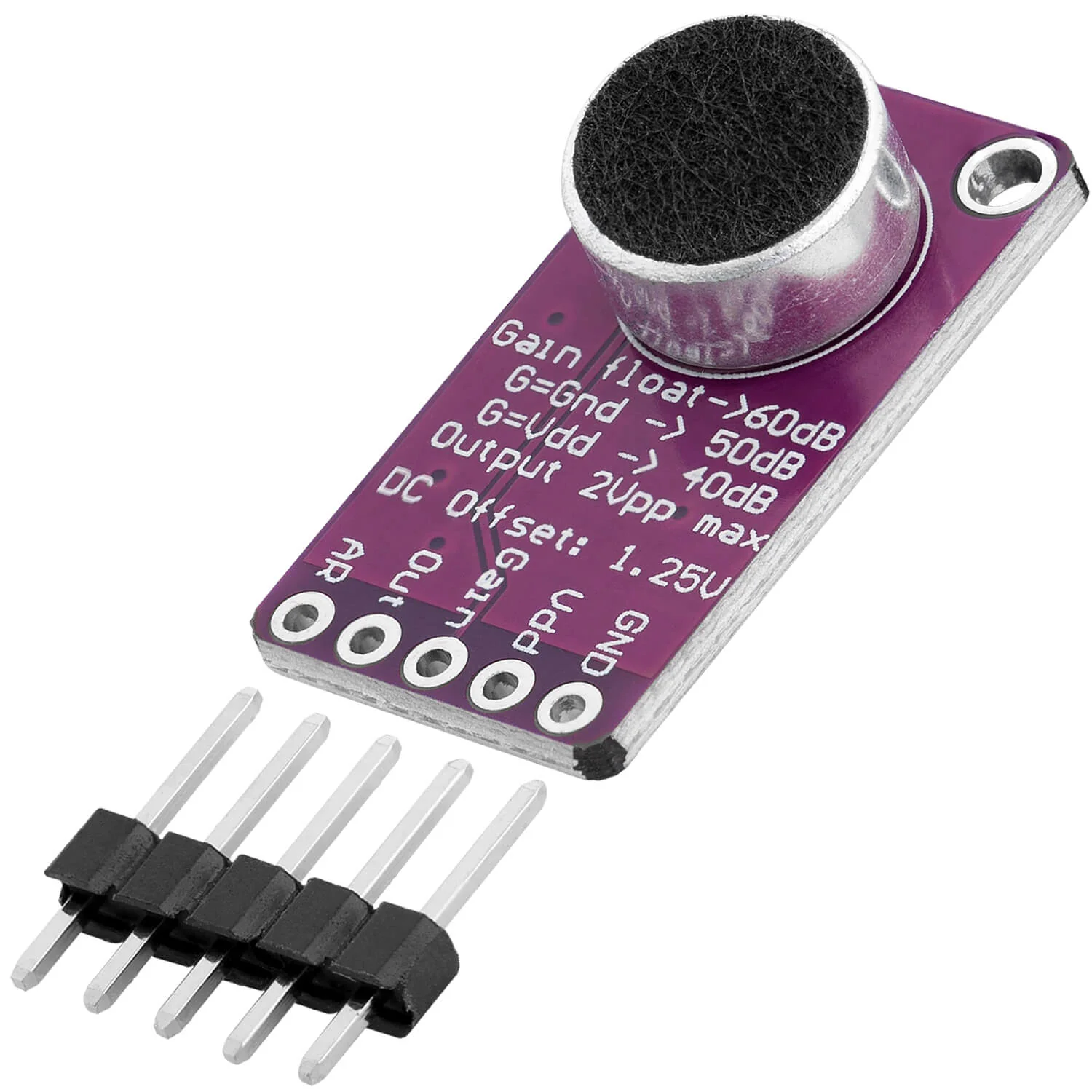
MAX9814 Microphone Amplifier Module
4,500 د.ع
Capture high-quality, consistent audio for your sound-reactive projects with the MAX9814 Electret Microphone Amplifier Module, a sophisticated breakout board featuring automatic gain control. Unlike standard microphone amplifiers that clip or distort when loud sounds occur, the MAX9814 automatically adjusts its gain in real-time, quieting loud sounds while amplifying quieter signals to create a clean, balanced audio output. This makes it an ideal choice for voice recognition systems, audio-reactive LED projects, sound level meters, recording devices, and any project where audio levels are unpredictable.
In stock
CompareDescription
MAX9814 Electret Microphone Amplifier Module – Automatic Gain Control (AGC) for Arduino
Capture high-quality, consistent audio for your sound-reactive projects with the MAX9814 Electret Microphone Amplifier Module, a sophisticated breakout board featuring automatic gain control. Unlike standard microphone amplifiers that clip or distort when loud sounds occur, the MAX9814 automatically adjusts its gain in real-time, quieting loud sounds while amplifying quieter signals to create a clean, balanced audio output. This makes it an ideal choice for voice recognition systems, audio-reactive LED projects, sound level meters, recording devices, and any project where audio levels are unpredictable.
The module is built around the Maxim MAX9814 integrated circuit, a low-cost, high-quality microphone amplifier specifically designed for electret condenser microphones. The built-in AGC circuitry continuously monitors the output level, reducing gain when loud sounds are detected to prevent clipping, then slowly restoring gain when the audio level drops. The board includes a pre-soldered electret microphone capsule, a low-noise microphone bias generator, and all necessary support components, providing a complete, ready-to-use audio input solution for your microcontroller projects.
Key Features
Automatic Gain Control
The MAX9814’s AGC dynamically adjusts the amplifier gain based on input signal strength, preventing output clipping from loud sounds while boosting quieter signals. This eliminates the need for constant manual gain adjustment and ensures consistent audio levels across varying sound conditions.
Selectable Maximum Gain
The module’s maximum gain can be configured for 40dB, 50dB, or 60dB by connecting the Gain pin to VCC, GND, or leaving it floating. This allows you to optimize sensitivity for different applications, from quiet environments to loud venues.
Programmable Attack and Release Times
The AGC’s response characteristics can be adjusted, changing how quickly the amplifier responds to loud sounds and how slowly it recovers after loud sounds subside. This allows fine-tuning for different application requirements.
Wide Frequency Response
With a frequency response spanning 20Hz to 20kHz, the MAX9814 captures the full range of human hearing, making it suitable for music recording, voice capture, and general audio sensing applications.
Low Noise and Distortion
The amplifier features low noise and low total harmonic distortion, ensuring clean, accurate audio reproduction even at high gain settings.
2Vpp Output
The module provides a rail-to-rail output with a typical 2V peak-to-peak swing, making it compatible with the analog inputs of most microcontrollers including Arduino, ESP32, and STM32.
Low Power Consumption
Operating from a 2.7V to 5.5V supply, the MAX9814 draws only 1.2mA of current, making it suitable for battery-powered portable applications.
Simple 3-Pin Interface
The module provides a simple 3-pin interface (VCC, GND, OUT) for easy connection to microcontrollers, plus additional pins for gain and attack/release configuration.
Specifications
| Parameter | Value |
|---|---|
| Operating Voltage | 2.7V – 5.5V DC |
| Current Consumption | 1.2mA (typical) |
| Output Type | Analog (rail-to-rail) |
| Output Voltage Swing | 0.1V to (VDD – 0.1V) |
| Maximum Gain Options | 40dB, 50dB, 60dB (selectable) |
| Frequency Response | 20Hz – 20kHz |
| Signal-to-Noise Ratio | 72dB |
| Total Harmonic Distortion | 0.04% (typical) |
| Microphone Type | Electret condenser (pre-soldered) |
| Dimensions | Approximately 20mm x 20mm |
| Interface | 4-pin or 5-pin header (2.54mm pitch) |
Pin Configuration
| Pin | Function | Description |
|---|---|---|
| VCC | Power Supply | 2.7V – 5.5V DC |
| GND | Ground | Common ground |
| OUT | Analog Output | AGC-compensated audio output |
| GAIN | Gain Select | Connect to VCC (40dB), GND (50dB), or float (60dB) |
| AR | Attack/Release | Adjust AGC response characteristics |
Wiring Diagram
Arduino Connection
MAX9814 Module          Arduino Uno
--------------          -----------
VCC            ----->    3.3V or 5V
GND            ----->    GND
OUT            ----->    A0 (Analog Input)
GAIN           ----->    Optional (VCC, GND, or float)
ESP32 Connection
MAX9814 Module          ESP32
--------------          -----
VCC            ----->    3.3V
GND            ----->    GND
OUT            ----->    GPIO36 (ADC)
GAIN           ----->    Optional (VCC, GND, or float)
Arduino Code Example
const int micPin = A0;     // MAX9814 output connected to analog pin
int micValue = 0;

void setup() {
  Serial.begin(115200);
  Serial.println("MAX9814 Microphone Amplifier Ready");
}

void loop() {
  // Read analog value from microphone
  micValue = analogRead(micPin);

  // Convert to voltage (assuming 5V reference)
  float voltage = (micValue / 1023.0) * 5.0;

  // Print raw value and voltage
  Serial.print("Mic Value: ");
  Serial.print(micValue);
  Serial.print(" | Voltage: ");
  Serial.print(voltage, 3);
  Serial.println("V");

  // Simple sound level indicator
  if (micValue < 100) {
    Serial.println("Silent");
  } else if (micValue < 300) {
    Serial.println("Quiet");
  } else if (micValue < 600) {
    Serial.println("Normal");
  } else if (micValue < 800) {
    Serial.println("Loud");
  } else {
    Serial.println("Very Loud!");
  }

  Serial.println("-------------------");
  delay(100);
}
Audio Reactive LED Example
const int micPin = A0;
const int ledPin = 9;  // PWM-capable pin for LED

void setup() {
  pinMode(ledPin, OUTPUT);
  Serial.begin(115200);
}

void loop() {
  int micValue = analogRead(micPin);

  // Map microphone value to LED brightness (0-255)
  int brightness = map(micValue, 0, 1023, 0, 255);

  // Constrain brightness to valid range
  brightness = constrain(brightness, 0, 255);

  // Set LED brightness
  analogWrite(ledPin, brightness);

  delay(10);
}
Gain Configuration Guide
| GAIN Pin Connection | Maximum Gain | Best For |
|---|---|---|
| Connect to VCC | 40dB | Very loud environments (concerts, machinery) |
| Leave Floating | 50dB (default) | General-purpose, most applications |
| Connect to GND | 60dB | Quiet environments (voice, distant sounds) |
Attack/Release Configuration (AR Pin)
| AR Connection | Attack/Release Ratio | Application |
|---|---|---|
| Tie to VCC | 1:4000 (default) | General-purpose, slow release |
| Leave Floating | 1:2000 | Moderate response, faster recovery |
| Tie to GND | 1:500 | Fast response for abrupt sound changes |
Common Applications
-
Voice recognition and speech control systems
-
Audio-reactive LED lighting and visualizers
-
Sound level meters and noise monitoring
-
Clap switches and sound-activated triggers
-
Smart home voice interfaces
-
Recording and audio logging
-
Musical instrument amplification
-
Baby monitors and security devices
-
Interactive art installations
-
Robotics sound sensing
Important Usage Notes
-
The electret microphone is sensitive to mechanical shock; handle the module carefully
-
For best results, position the microphone away from wind and vibration sources
-
The AGC takes approximately 1-2 seconds to adjust to changing sound levels
-
The output is a DC-biased signal; a coupling capacitor may be needed for AC-only applications
-
For 3.3V systems, ensure the microcontroller’s ADC reference matches the supply voltage
-
The microphone has a directional pickup pattern; orient towards the sound source for best sensitivity
Package Contents
-
1 x MAX9814 Electret Microphone Amplifier Module
-
(Microphone pre-soldered on board)
وحدة مضخم ميكروفون MAX9814 – مضخم تحكم تلقائي في الكسب (AGC) لـ Arduino
التقط صوتًا عالي الجودة ومتسقًا لمشاريعك التفاعلية مع وحدات مضخم الميكروفون MAX9814، وهي لوحة توصيل متطورة تتميز بالتحكم التلقائي في الكسب. على عكس مضخمات الميكروفون القياسية التي تتشوه عند حدوث أصوات عالية، يقوم MAX9814 بضبط كسبه تلقائيًا في الوقت الفعلي، مما يخفض الأصوات العالية ويعزز الإشارات الأكثر هدوءًا لإنشاء خرج صوتي نظيف ومتوازن. هذا يجعله خيارًا مثاليًا لأنظمة التعرف على الصوت ومشاريع LED التفاعلية مع الصوت وأجهزة قياس مستوى الصوت وأجهزة التسجيل وأي مشروع حيث تكون مستويات الصوت غير متوقعة.
تم بناء الوحدة حول دائرة MAX9814 من Maxim، وهو مضخم ميكروفون عالي الجودة ومنخفض التكلفة مصمم خصيصًا لميكروفونات المكثف الإلكتريت. تراقب دائرة AGC المدمجة مستوى الخرج باستمرار، مما يقلل الكسب عند اكتشاف أصوات عالية لمنع التشويه، ثم يستعيد الكسب ببطء عندما ينخفض مستوى الصوت. تتضمن اللوحة كبسولة ميكروفون إلكتريت ملحومة مسبقًا ومولد تحيز ميكروفون منخفض الضوضاء وجميع مكونات الدعم اللازمة، مما يوفر حل إدخال صوتي كامل وجاهز للاستخدام لمشاريع المتحكمات الدقيقة الخاصة بك.
المميزات الرئيسية
التحكم التلقائي في الكسب
يضبط AGC في MAX9814 كسب المضخم ديناميكيًا بناءً على قوة إشارة الدخل، مما يمنع تشويه الخرج من الأصوات العالية مع تعزيز الإشارات الأكثر هدوءًا. هذا يلغي الحاجة إلى ضبط الكسب اليدوي المستمر ويضمن مستويات صوت متسقة عبر ظروف الصوت المختلفة.
كسب أقصى قابل للتحديد
يمكن تكوين أقصى كسب للوحدة لـ 40dB أو 50dB أو 60dB عن طريق توصيل دبوس الكسب بـ VCC أو GND أو تركه طافيًا. هذا يسمح لك بتحسين الحساسية لتطبيقات مختلفة، من البيئات الهادئة إلى الأماكن الصاخبة.
أوقات هجوم وتحرير قابلة للبرمجة
يمكن ضبط خصائص استجابة AGC، مما يغير سرعة استجابة المضخم للأصوات العالية ومدى بطء تعافيه بعد تلاشي الأصوات العالية.
استجابة ترددية واسعة
مع استجابة ترددية تمتد من 20Hz إلى 20kHz، يلتقط MAX9814 النطاق الكامل للسمع البشري، مما يجعله مناسبًا لتسجيل الموسيقى والتقاط الصوت وتطبيقات الاستشعار الصوتي العامة.
ضوضاء منخفضة وتشويه منخفض
يتميز المضخم بضوضاء منخفضة وتشويه توافقي كلي منخفض، مما يضمن إعادة إنتاج صوت نظيف ودقيق حتى عند إعدادات الكسب العالية.
خرج 2Vpp
توفر الوحدة خرجًا بسعة 2 فولت من الذروة إلى الذروة، مما يجعله متوافقًا مع المدخلات التماثلية لمعظم المتحكمات الدقيقة بما في ذلك Arduino و ESP32 و STM32.
استهلاك طاقة منخفض
يعمل من مصدر طاقة 2.7V إلى 5.5V، ويسحب MAX9814 تيارًا يبلغ 1.2mA فقط، مما يجعله مناسبًا للتطبيقات المحمولة التي تعمل بالبطارية.
واجهة بسيطة 3 دبابيس
توفر الوحدة واجهة بسيطة 3 دبابيس (VCC, GND, OUT) لسهولة الاتصال بالمتحكمات الدقيقة، بالإضافة إلى دبابيس إضافية لتكوين الكسب وهجوم/تحرير AGC.
المواصفات الفنية
| المعامل | القيمة |
|---|---|
| جهد التشغيل | 2.7V – 5.5V |
| استهلاك التيار | 1.2 مللي أمبير |
| نوع الخرج | تماثلي |
| خيارات الكسب الأقصى | 40dB, 50dB, 60dB |
| استجابة التردد | 20Hz – 20kHz |
| نسبة الإشارة إلى الضوضاء | 72dB |
| التشويه التوافقي الكلي | 0.04% |
| نوع الميكروفون | إلكتريت (ملحوم مسبقًا) |
| الأبعاد | حوالي 20 مم × 20 مم |
تكوين الدبابيس
| الدبوس | الوظيفة |
|---|---|
| VCC | طاقة 2.7V-5.5V |
| GND | أرضي |
| OUT | خرج صوتي |
| GAIN | اختيار الكسب |
| AR | ضبط هجوم/تحرير AGC |
كود Arduino مثال
const int micPin = A0;
int micValue = 0;

void setup() {
  Serial.begin(115200);
  Serial.println("MAX9814 جاهز");
}

void loop() {
  micValue = analogRead(micPin);
  float voltage = (micValue / 1023.0) * 5.0;

  Serial.print("قيمة الميكروفون: ");
  Serial.print(micValue);
  Serial.print(" | الجهد: ");
  Serial.print(voltage, 3);
  Serial.println("V");

  delay(100);
}
التطبيقات الشائعة
-
التعرف على الصوت وأنظمة التحكم الصوتي
-
إضاءة LED متفاعلة مع الصوت
-
أجهزة قياس مستوى الصوت
-
واجهات صوت المنزل الذكي
-
التسجيل وتسجيل الصوت
-
مشاريع الفنون التفاعلية
-
استشعار الصوت في الروبوتات
محتويات العلبة
-
1 × وحدة مضخم ميكروفون MAX9814



Reviews
There are no reviews yet