0
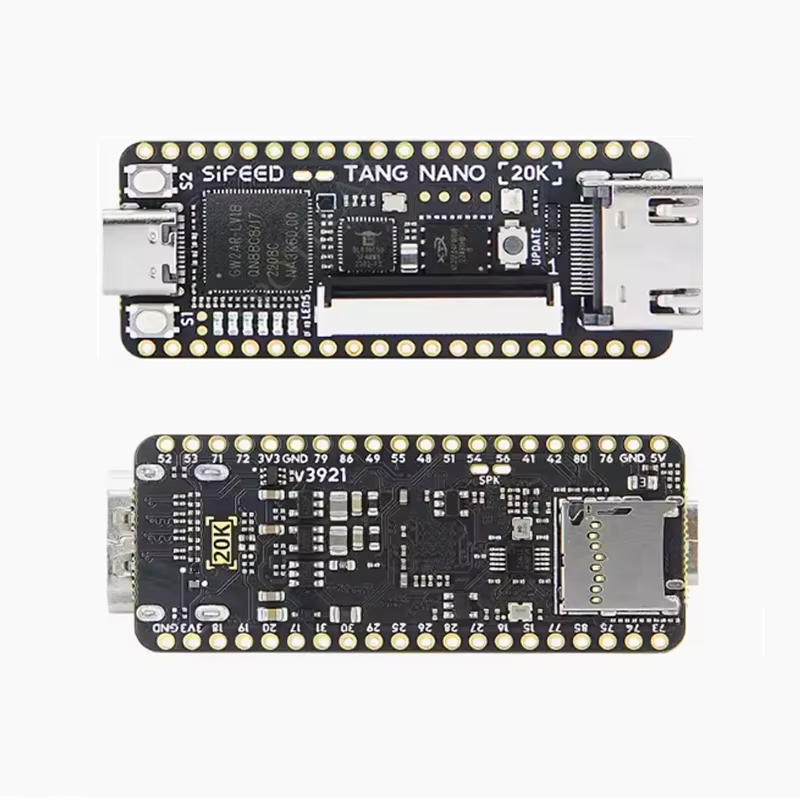
Sipeed Tang Nano 20K FPGA Development Board
65,000 د.ع
Explore the world of FPGA development with the Sipeed Tang Nano 20K, a compact yet powerful development board based on the Gowin GW2AR-18 FPGA chip. This affordable and feature-rich board is designed for hobbyists, students, and professionals seeking to dive into digital logic design, retro gaming emulation, RISC-V softcore experimentation, and embedded video processing applications . With 20,736 logic cells and onboard SDRAM, the Tang Nano 20K packs significant processing power into a tiny 54mm x 22.5mm form facto
In stock
CompareDescription
Sipeed Tang Nano 20K FPGA Development Board – Gowin GW2AR-18 FPGA with 20K LUTs
Explore the world of FPGA development with the Sipeed Tang Nano 20K, a compact yet powerful development board based on the Gowin GW2AR-18 FPGA chip. This affordable and feature-rich board is designed for hobbyists, students, and professionals seeking to dive into digital logic design, retro gaming emulation, RISC-V softcore experimentation, and embedded video processing applications . With 20,736 logic cells and onboard SDRAM, the Tang Nano 20K packs significant processing power into a tiny 54mm x 22.5mm form factor .
The board is built around the Gowin GW2AR-18 FPGA, featuring 20,736 LUT4 logic cells, 15,552 flip-flops, 48 DSP slices supporting 18×18-bit multiplication, and 2 phase-locked loops (PLLs) for flexible clock management . Onboard memory includes 828K bits of block SRAM and 64M bits of SDR SDRAM for data-intensive applications . An onboard BL616 chip serves as a JTAG programmer and USB-to-serial converter, enabling easy bitstream downloading and UART communication with your computer via a single USB-C cable .
The Tang Nano 20K excels in multimedia applications with both an HDMI port and a 40-pin RGB LCD connector for video output . An onboard MS5351 clock generator provides three additional programmable clocks for flexible timing requirements . Additional features include a microSD card slot for storage expansion, a MAX98357A PCM amplifier for audio output, six user LEDs, one WS2812 RGB LED, two user buttons, and a 40-pin GPIO header for peripheral expansion .
Key Features
Powerful Gowin GW2AR-18 FPGA
Powered by the Gowin GW2AR-18 FPGA chip featuring 20,736 LUT4 logic cells, 15,552 flip-flops, 48 DSP slices with 18×18-bit multipliers, and 2 PLLs, providing substantial resources for complex digital designs and softcore processors .
Onboard Memory Resources
Integrates 828K bits of block SRAM and 64M bits of SDR SDRAM for data buffering and storage-intensive applications, plus 64M bits of QSPI flash for storing FPGA bitstreams .
Built-in Programmer and Debugger
Onboard BL616 microcontroller serves as a JTAG programmer and USB-to-UART converter, allowing bitstream downloading and serial communication through a single USB-C cable without external programmers .
HDMI and RGB LCD Video Output
Features both an HDMI port and a 40-pin RGB LCD connector for flexible video output options, making it ideal for retro gaming emulators, video processing, and display driver projects .
Programmable Clock Generator
Onboard MS5351 clock generator provides three additional programmable clock sources for flexible timing requirements in complex designs .
Audio Output Capability
Includes a MAX98357A PCM amplifier for audio output, with a 2-pin header for connecting a speaker for sound effects and music in gaming or multimedia projects .
MicroSD Card Storage
Built-in microSD card slot provides removable storage for ROM files, data logging, and firmware updates, essential for retro gaming emulators and data-intensive applications .
Rich User Interface
Provides six user-controllable LEDs, one WS2812 addressable RGB LED, and two user push buttons for interactive project development and status indication .
Compact Breadboard-Friendly Design
Measures just 54.04mm x 22.55mm with standard 2.54mm pin headers, making it easy to integrate into breadboards and custom projects .
Gowin IDE Support
Fully supported by Gowin EDA (Educational Edition), a free and user-friendly FPGA development environment with fast synthesis times and minimal system requirements, compatible with Verilog and VHDL .
Specifications
| Parameter | Value |
|---|---|
| FPGA Chip | Gowin GW2AR-18 QN88 |
| Logic Cells (LUT4) | 20,736 |
| Flip-Flops (FF) | 15,552 |
| Block SRAM (B-SRAM) | 828 Kbits |
| Shadow SRAM (S-SRAM) | 41,472 bits |
| External SDRAM | 64 Mbits (32-bit SDR SDRAM) |
| DSP Slices | 48 (18×18-bit multipliers) |
| PLLs | 2 |
| I/O Banks | 8 |
| Onboard Flash | 64 Mbits QSPI |
| Programmer | BL616 (onboard JTAG + USB-UART) |
| Clock Generator | MS5351 (3 programmable outputs) |
| Video Outputs | HDMI, 40-pin RGB LCD |
| Audio | MAX98357A PCM amplifier |
| Storage | microSD card slot |
| User I/O | 6 LEDs, 1 RGB LED (WS2812), 2 buttons |
| Expansion | 40-pin GPIO header |
| Power | 5V via USB-C |
| Dimensions | 54.04mm x 22.55mm |
Pin Configuration
The Tang Nano 20K features a 40-pin GPIO header (2.54mm pitch) providing access to FPGA I/O pins for peripheral connections. Key pin groups include:
| Pin Group | Functions |
|---|---|
| GPIO | General-purpose I/O for sensors, displays, and peripherals |
| SPI | Serial peripheral interface for communication with external devices |
| I2S | Digital audio interface |
| UART | Serial communication with host computer (via onboard BL616) |
| LCD | RGB LCD interface (40-pin FPC connector) |
| HDMI | HDMI output for video display |
For complete pin mapping, refer to the official Sipeed Tang Nano 20K documentation.
Wiring Diagram
Basic Power and Programming
USB-C Cable -----> Board USB-C Port
(Provides 5V power and programming via onboard BL616)
Connecting a Display
HDMI Cable -----> Board HDMI Port (for video output)
or
RGB LCD -----> 40-pin FPC Connector
Audio Output
Speaker -----> 2-pin Audio Header
(Driven by MAX98357A amplifier)
Storage Expansion
microSD Card -----> Board microSD Slot
(For ROM files, data logging, and firmware)
Development Environment Setup
Gowin IDE Installation
Download Gowin EDA Educational Edition from the Gowin Semiconductor website
Install the software following the installation wizard
Apply for a free license (required for synthesis)
Launch Gowin IDE and create a new project for the GW2AR-18 device
Programming the Board
Connect the Tang Nano 20K to your computer via USB-C
The board will be recognized as a JTAG programmer (BL616)
In Gowin IDE, click “Program” to download the bitstream to the FPGA
For flash storage, select “Program Flash” to save the bitstream persistently
Example Code
LED Blink Test (Verilog)
module led_blink (
    input wire clk_27m,      // 27MHz input clock
    input wire rst_n,        // Active low reset
    output reg led           // LED output
);

    reg [24:0] counter;

    always @(posedge clk_27m or negedge rst_n) begin
        if (!rst_n) begin
            counter <= 0;
            led <= 0;
        end else begin
            counter <= counter + 1;
            if (counter == 27_000_000) begin  // 1 second at 27MHz
                counter <= 0;
                led <= ~led;
            end
        end
    end

endmodule
HDMI Test Pattern (Verilog – Simplified)
// Simplified HDMI test pattern example
// Full implementation requires proper timing constraints and PLL configuration

module hdmi_test (
    input wire clk_27m,
    input wire rst_n,
    output wire hdmi_clk,
    output wire hdmi_data
);

    // PLL for HDMI pixel clock generation
    // Configure PLL to generate 74.25MHz for 720p output
    // Implement video timing generator (720p: 1280x720)
    // Generate color bars or test patterns

    // Refer to Gowin example projects for complete HDMI implementation

endmodule
Retro Gaming Applications
The Tang Nano 20K has a vibrant open-source community focused on retro gaming emulation. Popular projects include:
NESTang (NES Emulator)
Cycle-accurate Nintendo Entertainment System emulation
720p HDMI output with sound
ROM loading from microSD card
Support for PlayStation 2 and USB game controllers
GBTang (GameBoy Emulator)
Nintendo GameBoy emulation
720p HDMI output with sound
ROM loading from microSD card with easy menu system
Extensive mapper support
Common Applications
Retro gaming console emulation (NES, GameBoy)
RISC-V softcore processor experimentation
Digital signal processing and audio synthesis
Video processing and image filtering
Embedded system prototyping and education
FPGA-based cryptography and hardware security
Custom communication protocols and SDR
Industrial control and automation
Package Contents
1 x Sipeed Tang Nano 20K FPGA Development Board
(USB-C cable may be included depending on kit version)
(Pin headers may require soldering depending on variant)
لوحة تطوير FPGA Sipeed Tang Nano 20K – معالج Gowin GW2AR-18 FPGA بسعة 20K LUT
استكشف عالم تطوير FPGA باستخدام لوحة تطوير Sipeed Tang Nano 20K المدمجة والقوية، المبنية على شريحة Gowin GW2AR-18 FPGA. تم تصميم هذه اللوحة المتطورة وبأسعار معقولة للهواة والطلاب والمحترفين الذين يسعون للتعمق في تصميم المنطق الرقمي ومحاكاة ألعاب الريترو وتجارب المعالج RISC-V الناعم وتطبيقات معالجة الفيديو المدمجة . مع 20,736 خلية منطقية وذاكرة SDRAM مدمجة، تقدم Tang Nano 20K قوة معالجة كبيرة في شكل مضغوط بحجم 54 مم × 22.5 مم .
تم بناء اللوحة حول شريحة Gowin GW2AR-18 FPGA، التي تتميز بـ 20,736 خلية منطقية LUT4، و 15,552 فلوب فلوب، و 48 شريحة DSP تدعم الضرب 18×18 بت، و 2 حلقة قفل طور للمرونة في إدارة الساعة . تشمل الذاكرة المدمجة 828 كيلوبت من ذاكرة SRAM الكتلية و 64 ميجابت من ذاكرة SDR SDRAM للتطبيقات المكثفة للبيانات . تعمل شريحة BL616 المدمجة كمبرمج JTAG ومحول USB-to-serial، مما يتيح تنزيل الـ bitstream والتواصل التسلسلي مع جهاز الكمبيوتر عبر كابل USB-C واحد .
تتفوق Tang Nano 20K في تطبيقات الوسائط المتعددة مع كل من منفذ HDMI ومنفذ شاشة RGB LCD 40 دبوسًا لإخراج الفيديو . يوفر مولد الساعة MS5351 المدمج ثلاث ساعات إضافية قابلة للبرمجة لمتطلبات التوقيت المرنة . تشمل الميزات الإضافية فتحة بطاقة microSD لتوسعة التخزين، ومضخم PCM MAX98357A لإخراج الصوت، وستة مصابيح LED للمستخدم، ومصباح RGB WS2812 واحد، وزرين للمستخدم، ورأس GPIO 40 دبوسًا للتوسعة .
المميزات الرئيسية
معالج Gowin GW2AR-18 FPGA القوي
مدعوم بشريحة Gowin GW2AR-18 FPGA التي تتميز بـ 20,736 خلية منطقية LUT4، و 15,552 فلوب فلوب، و 48 شريحة DSP مع مضاعفات 18×18 بت، و 2 حلقة قفل طور، مما يوفر موارد كبيرة للتصاميم الرقمية المعقدة والمعالجات الناعمة .
موارد ذاكرة مدمجة
تدمج 828 كيلوبت من ذاكرة SRAM الكتلية و 64 ميجابت من ذاكرة SDR SDRAM لتخزين البيانات المؤقتة والتطبيقات المكثفة للتخزين، بالإضافة إلى 64 ميجابت من ذاكرة فلاش QSPI لتخزين bitstream FPGA .
مبرمج ومصحح مدمج
تعمل وحدة التحكم الدقيقة BL616 المدمجة كمبرمج JTAG ومحول USB-to-UART، مما يسمح بتنزيل bitstream والتواصل التسلسلي عبر كابل USB-C واحد بدون مبرمجين خارجيين .
إخراج فيديو HDMI و RGB LCD
تتميز بكل من منفذ HDMI ومنفذ شاشة RGB LCD 40 دبوسًا لخيارات إخراج فيديو مرنة، مما يجعلها مثالية لمحاكيات ألعاب الريترو ومعالجة الفيديو ومشاريع مشغلات الشاشات .
مولد ساعة قابل للبرمجة
يوفر مولد الساعة MS5351 المدمج ثلاث مصادر ساعة إضافية قابلة للبرمجة لمتطلبات التوقيت المرنة في التصاميم المعقدة .
قدرة إخراج صوت
تتضمن مضخم PCM MAX98357A لإخراج الصوت، مع رأس 2 دبوس لتوصيل مكبر الصوت للمؤثرات الصوتية والموسيقى في مشاريع الألعاب أو الوسائط المتعددة .
تخزين عبر بطاقة microSD
فتحة بطاقة microSD مدمجة توفر تخزينًا قابلاً للإزالة لملفات ROM وتسجيل البيانات وتحديثات البرامج الثابتة، ضرورية لمحاكيات ألعاب الريترو والتطبيقات المكثفة للبيانات .
واجهة مستخدم غنية
توفر ستة مصابيح LED يمكن التحكم بها، ومصباح RGB WS2812 واحد قابل للعنونة، وزرين ضغط للمستخدم لتطوير المشاريع التفاعلية وإظهار الحالة .
تصميم مضغوط مناسب للوحات التجارب
قياسات 54.04 مم × 22.55 مم فقط مع رؤوس دبابيس بمسافة 2.54 مم قياسية، مما يسهل دمجها في لوحات التجارب والمشاريع المخصصة .
دعم بيئة Gowin IDE
مدعومة بالكامل بواسطة Gowin EDA، بيئة تطوير FPGA المجانية وسهلة الاستخدام مع أوقات تركيب سريعة ومتطلبات نظام بسيطة، متوافقة مع Verilog و VHDL .
المواصفات الفنية
| المعلمة | القيمة |
|---|---|
| شريحة FPGA | Gowin GW2AR-18 QN88 |
| الخلايا المنطقية (LUT4) | 20,736 |
| Flip-Flops (FF) | 15,552 |
| ذاكرة SRAM الكتلية | 828 كيلوبت |
| ذاكرة SRAM الظلية | 41,472 بت |
| ذاكرة SDRAM خارجية | 64 ميجابت |
| شرائح DSP | 48 |
| حلقات قفل الطور (PLL) | 2 |
| بنوك الإدخال/الإخراج | 8 |
| ذاكرة الفلاش المدمجة | 64 ميجابت QSPI |
| المبرمج | BL616 |
| مولد الساعة | MS5351 |
| مخرجات الفيديو | HDMI، شاشة RGB LCD 40 دبوس |
| الصوت | مضخم MAX98357A |
| التخزين | فتحة microSD |
| واجهة المستخدم | 6 مصابيح LED، 1 RGB LED، 2 زر |
| التوسعة | رأس GPIO 40 دبوس |
| الطاقة | 5V عبر USB-C |
| الأبعاد | 54.04 مم × 22.55 مم |
التطبيقات الشائعة
محاكاة أجهزة ألعاب الريترو
تجارب المعالج RISC-V الناعم
معالجة الإشارات الرقمية وتركيب الصوت
معالجة الفيديو وتصفية الصور
نمذجة أولية للأنظمة المدمجة والتعليم
التشفير القائم على FPGA وأمان الأجهزة
بروتوكولات الاتصال المخصصة والراديو المعرف بالبرمجيات
التحكم الصناعي والأتمتة
محتويات العلبة
1 × لوحة تطوير FPGA Sipeed Tang Nano 20K



Reviews
There are no reviews yet