0
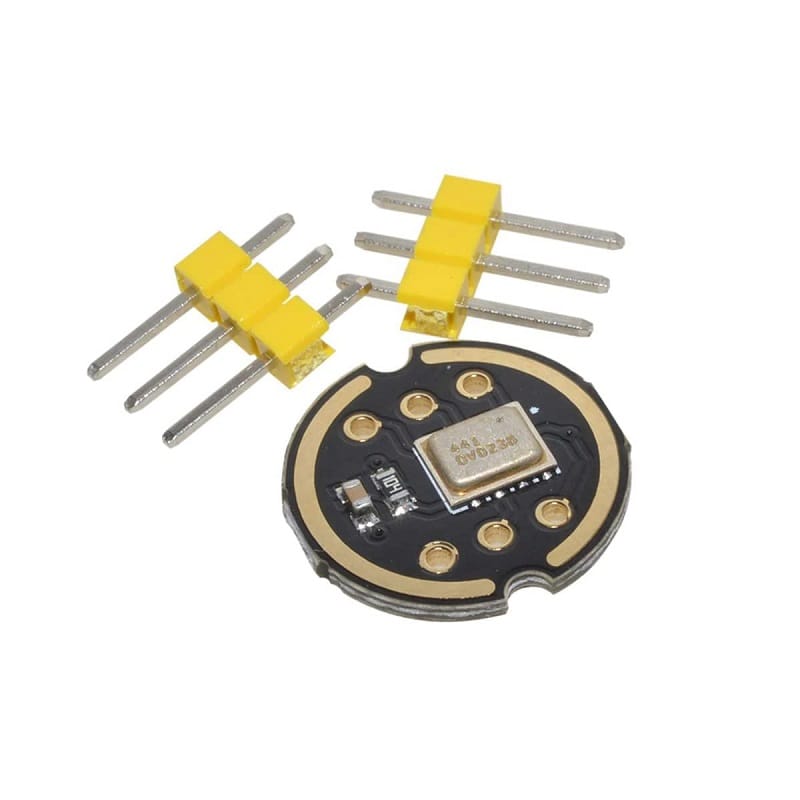
INMP441 Microphone Module High SNR
3,500 د.ع
Capture high-quality digital audio for your projects with the INMP441 Omnidirectional MEMS Microphone Module, a high-performance digital output microphone based on the TDK InvenSense INMP441 chip . This compact module converts acoustic sound directly into a digital signal using an I2S interface, eliminating the need for external analog-to-digital converters or audio codecs . The INMP441 is ideal for voice control systems, audio recording, IoT devices, smart home applications, and any project requiring high-fidelity audio capture
In stock
CompareDescription
INMP441 Omnidirectional I2S MEMS Microphone Module – High SNR Digital Audio Sensor for ESP32 Arduino
Capture high-quality digital audio for your projects with the INMP441 Omnidirectional MEMS Microphone Module, a high-performance digital output microphone based on the TDK InvenSense INMP441 chip . This compact module converts acoustic sound directly into a digital signal using an I2S interface, eliminating the need for external analog-to-digital converters or audio codecs . The INMP441 is ideal for voice control systems, audio recording, IoT devices, smart home applications, and any project requiring high-fidelity audio capture .
The INMP441 features a high signal-to-noise ratio (SNR) of 61 dBA, making it an excellent choice for near-field applications where clear voice pickup is essential . Its flat wideband frequency response from 60 Hz to 15 kHz results in natural sound with high intelligibility . The module includes a 24-bit I2S digital interface, allowing direct connection to digital processors such as ESP32, STM32, Raspberry Pi, and other microcontrollers without additional audio codecs . The omnidirectional pickup pattern captures sound equally from all directions, providing 360-degree coverage for versatile placement options .
This module comes as a compact breakout board with standard 2.54mm pin headers, making it easy to integrate into breadboards and custom PCBs . It operates on a low 1.4 mA of current at 1.8V supply, making it suitable for battery-powered and portable applications . The bottom-port design and small form factor allow for flexible mounting in space-constrained enclosures .
Key Features
High-Performance MEMS Microphone
Based on the TDK InvenSense INMP441 chip, featuring a high SNR of 61 dBA for clear audio capture in near-field applications, ideal for voice commands, video conferencing, and voice control systems .
Digital I2S Interface with 24-Bit Data
Direct digital output via I2S protocol with 24-bit precision, eliminating analog noise and simplifying circuit design. Connects directly to digital processors without the need for an audio codec .
Omnidirectional Pickup Pattern
Captures sound equally from all directions (360-degree coverage), making it versatile for placement in any orientation without compromising audio quality . Perfect for conference systems, ambient recording, and voice-activated devices .
Wide Frequency Response
Flat frequency response from 60 Hz to 15 kHz ensures natural, intelligible sound reproduction with excellent clarity for both voice and general audio applications .
Low Power Consumption
Consumes only 1.4 mA at 1.8V in normal operation, making it ideal for battery-powered portable devices, wearables, and IoT applications where power efficiency is critical .
High Sensitivity
Sensitivity of -26 dBFS at 94 dB SPL ensures strong signal levels even with moderate sound sources, reducing the need for additional pre-amplification .
Compact Breakout Board Design
Small form factor with standard 2.54mm pin headers for easy breadboarding and integration into custom PCBs . The module includes all necessary decoupling components for reliable operation .
Wide Operating Voltage Range
Operates from 1.62V to 3.63V DC, making it compatible with both 3.3V and 1.8V logic systems . The module is typically powered from 3.3V when used with ESP32 or Arduino boards .
Left/Right Channel Selection
Features an L/R pin for stereo configuration, allowing multiple microphones to share the same I2S bus. Tie L/R low for left channel or high for right channel .
High Acoustic Overload Point
Handles sound pressure levels up to 120 dB SPL, preventing distortion even in loud environments such as concerts, industrial settings, or near speakers .
Specifications
| Parameter | Value |
|---|---|
| Sensor Type | MEMS (Micro-Electro-Mechanical Systems) |
| Directionality | Omnidirectional (360°) |
| Interface | I2S (Inter-IC Sound) Digital |
| Data Resolution | 24-bit |
| SNR (Signal-to-Noise Ratio) | 61 dBA |
| Sensitivity | -26 dBFS ±3 dB at 1 kHz, 94 dB SPL |
| Frequency Response | 60 Hz – 15 kHz (±3 dB points) |
| Total Harmonic Distortion (THD) | 3% max at 105 dB SPL, 1 kHz |
| Acoustic Overload Point (AOP) | 120 dB SPL (peak) |
| Noise Floor | -87 dBFS |
| Operating Voltage | 1.62V – 3.63V DC (typically 3.3V) |
| Current Consumption (Normal) | 1.4 mA (typ) at 1.8V, 2.2 mA at 3.3V |
| Standby Current | 0.8 mA |
| Power-Down Current | 2-4.5 µA |
| Group Delay | 359 µs at 48 kHz sample rate |
| Operating Temperature | -40°C to +85°C |
| Module Interface | 6-pin header (2.54mm pitch) |
| Dimensions | Approximately 14mm diameter (board) |
| Port Location | Bottom Port |
Pin Configuration
| Pin | Name | Function | Connection |
|---|---|---|---|
| 1 | L/R | Left/Right Channel Select | GND = Left Channel, VDD = Right Channel |
| 2 | GND | Ground | Connect to system ground |
| 3 | VCC | Power Supply | 1.8V – 3.3V DC (typically 3.3V) |
| 4 | SD | Serial Data Output | I2S data line to microcontroller |
| 5 | SCK | Serial Clock | I2S bit clock from microcontroller |
| 6 | WS | Word Select | I2S frame sync (LRCLK) from microcontroller |
Wiring Diagram
ESP32 Connection
INMP441 Module              ESP32
--------------              -----
VCC              ----->     3.3V
GND              ----->     GND
SCK              ----->     GPIO26 (or any I2S BCLK pin)
WS               ----->     GPIO25 (or any I2S LRCK pin)
SD               ----->     GPIO33 (or any I2S DIN pin)
L/R              ----->     GND (for Left channel) or VCC (for Right)
Recommended ESP32 I2S Pin Assignments
| I2S Signal | Recommended GPIO | Alternate GPIOs |
|---|---|---|
| SCK (BCLK) | 26 | 14, 27, 32 |
| WS (LRCK) | 25 | 12, 15, 33 |
| SD (DIN) | 33 | 13, 34, 35 |
Note: Not all ESP32 pins support I2S. Refer to your specific board documentation.
Arduino Code Example (ESP32)
#include <driver/i2s.h>

// I2S Configuration
#define I2S_WS    25    // Word Select (LRCLK)
#define I2S_SD    33    // Serial Data (DIN)
#define I2S_SCK   26    // Serial Clock (BCLK)

#define I2S_PORT  I2S_NUM_0
#define BUFFER_LEN 512

int16_t sampleBuffer[BUFFER_LEN];

void i2s_install() {
  const i2s_config_t i2s_config = {
    .mode = (i2s_mode_t)(I2S_MODE_MASTER | I2S_MODE_RX),
    .sample_rate = 16000,
    .bits_per_sample = I2S_BITS_PER_SAMPLE_16BIT,
    .channel_format = I2S_CHANNEL_FMT_ONLY_LEFT,
    .communication_format = (i2s_comm_format_t)(I2S_COMM_FORMAT_STAND_I2S),
    .intr_alloc_flags = 0,
    .dma_buf_count = 8,
    .dma_buf_len = BUFFER_LEN,
    .use_apll = false
  };

  i2s_driver_install(I2S_PORT, &i2s_config, 0, NULL);
}

void i2s_setpin() {
  const i2s_pin_config_t pin_config = {
    .bck_io_num = I2S_SCK,
    .ws_io_num = I2S_WS,
    .data_out_num = I2S_PIN_NO_CHANGE,
    .data_in_num = I2S_SD
  };
  i2s_set_pin(I2S_PORT, &pin_config);
}

void setup() {
  Serial.begin(115200);
  delay(1000);
  Serial.println("INMP441 I2S Microphone Test");

  i2s_install();
  i2s_setpin();
  i2s_start(I2S_PORT);

  delay(500);
  Serial.println("Recording started...");
}

void loop() {
  size_t bytes_read;

  // Read audio samples from I2S microphone
  i2s_read(I2S_PORT, &sampleBuffer, sizeof(sampleBuffer), &bytes_read, portMAX_DELAY);

  int samples_read = bytes_read / sizeof(int16_t);

  if (samples_read > 0) {
    // Calculate average audio level
    int32_t sum = 0;
    for (int i = 0; i < samples_read; i++) {
      sum += abs(sampleBuffer[i]);
    }
    int16_t audioLevel = sum / samples_read;

    Serial.print("Audio Level: ");
    Serial.println(audioLevel);

    // Optional: Print first sample for debugging
    // Serial.print("Sample: ");
    // Serial.println(sampleBuffer[0]);
  }

  delay(100);
}
Advanced Example – Audio Recording to SD Card
#include <driver/i2s.h>
#include <FS.h>
#include <SD.h>
#include <SPI.h>

// I2S Pins
#define I2S_WS    25
#define I2S_SD    33
#define I2S_SCK   26

// SD Card Pins (adjust for your board)
#define SD_CS     5

#define I2S_PORT  I2S_NUM_0
#define SAMPLE_RATE 16000
#define RECORD_SECONDS 5

void setup() {
  Serial.begin(115200);

  // Initialize SD card
  if (!SD.begin(SD_CS)) {
    Serial.println("SD Card initialization failed!");
    return;
  }
  Serial.println("SD Card ready.");

  // Initialize I2S microphone
  i2s_config_t i2s_config = {
    .mode = (i2s_mode_t)(I2S_MODE_MASTER | I2S_MODE_RX),
    .sample_rate = SAMPLE_RATE,
    .bits_per_sample = I2S_BITS_PER_SAMPLE_16BIT,
    .channel_format = I2S_CHANNEL_FMT_ONLY_LEFT,
    .communication_format = I2S_COMM_FORMAT_STAND_I2S,
    .intr_alloc_flags = 0,
    .dma_buf_count = 8,
    .dma_buf_len = 256,
    .use_apll = false
  };

  i2s_driver_install(I2S_PORT, &i2s_config, 0, NULL);

  i2s_pin_config_t pin_config = {
    .bck_io_num = I2S_SCK,
    .ws_io_num = I2S_WS,
    .data_out_num = I2S_PIN_NO_CHANGE,
    .data_in_num = I2S_SD
  };
  i2s_set_pin(I2S_PORT, &pin_config);

  i2s_start(I2S_PORT);
  Serial.println("Recording...");

  // Record audio
  File audioFile = SD.open("/recording.raw", FILE_WRITE);
  if (!audioFile) {
    Serial.println("Failed to create file");
    return;
  }

  int samplesToRead = SAMPLE_RATE * RECORD_SECONDS;
  int16_t sample;

  for (int i = 0; i < samplesToRead; i++) {
    size_t bytes_read;
    i2s_read(I2S_PORT, &sample, sizeof(sample), &bytes_read, portMAX_DELAY);
    audioFile.write((uint8_t*)&sample, sizeof(sample));

    if (i % 1000 == 0) {
      Serial.print(".");
    }
  }

  audioFile.close();
  Serial.println("\nRecording complete!");
}

void loop() {
  // Recording done
}
Important Usage Notes
-
I2S Support Required: The INMP441 requires an I2S interface, which is not available on all microcontrollers. The ESP32 has excellent built-in I2S support. Arduino Uno (ATmega328P) does NOT support I2S without external hardware .
-
Voltage Levels: The module operates at 1.8V-3.3V logic. Do not connect to 5V pins directly. ESP32’s 3.3V logic is compatible .
-
Power Supply: Use a clean 3.3V power source. Adding a 10µF capacitor near the module’s VCC pin can reduce power supply noise .
-
L/R Channel Selection: For mono operation, tie L/R to GND (left channel) or VCC (right channel). For stereo, use two microphones with opposite L/R settings sharing SCK and WS lines .
-
Bottom Port: The microphone has a bottom acoustic port. Ensure the port is not blocked during installation. The board should be mounted with the port facing outward or with an acoustic seal .
-
Soldering: The module typically comes with unsoldered header pins. Solder carefully to avoid damaging the MEMS sensor .
-
Static Sensitivity: The INMP441 is ESD-sensitive. Use proper ESD precautions during handling and soldering .
Common Applications
-
Voice control and speech recognition systems
-
Smart home assistants and IoT voice interfaces
-
Audio recording and playback projects
-
Video conferencing systems and intercoms
-
Wearable devices and hearables
-
Acoustic monitoring and noise detection
-
Baby monitors and security systems
-
Robotics with voice commands
-
Educational audio projects
Package Contents
-
1 x INMP441 Omnidirectional I2S MEMS Microphone Module
-
1 x 6-pin male header (may require soldering)
وحدة ميكروفون INMP441 I2S متعدد الاتجاهات من نوع MEMS – مستشعر صوت رقمي عالي الدقة لـ ESP32 و Arduino
التقط صوتًا رقميًا عالي الجودة لمشاريعك باستخدام وحدة ميكروفون MEMS متعدد الاتجاهات INMP441، وهي وحدة ميكروفون رقمية عالية الأداء تعتمد على شريحة TDK InvenSense INMP441 . تحول هذه الوحدة المدمجة الصوت التناظري مباشرة إلى إشارة رقمية عبر واجهة I2S، مما يلغي الحاجة إلى محولات تماثلية رقمية خارجية أو وحدات ترميز صوتية . يعتبر INMP441 مثاليًا لأنظمة التحكم الصوتي وتسجيل الصوت وأجهزة إنترنت الأشياء وتطبيقات المنزل الذكي وأي مشروع يتطلب التقاط صوت عالي الدقة .
يتميز INMP441 بنسبة إشارة إلى ضوضاء عالية تبلغ 61 ديسيبل، مما يجعله خيارًا ممتازًا للتطبيقات القريبة حيث يكون التقاط الصوت الواضح ضروريًا . يوفر استجابة ترددية مسطحة من 60 هرتز إلى 15 كيلوهرتز مما ينتج صوتًا طبيعيًا بوضوح عالٍ . تتضمن الوحدة واجهة I2S رقمية 24 بت، مما يسمح بالاتصال المباشر بالمعالجات الرقمية مثل ESP32 و STM32 و Raspberry Pi والمتحكمات الدقيقة الأخرى دون الحاجة إلى وحدات ترميز صوتية إضافية . يلتقط نمط الالتقاط متعدد الاتجاهات الصوت بالتساوي من جميع الاتجاهات، مما يوفر تغطية 360 درجة لخيارات وضع مرنة .
تأتي هذه الوحدة كلوحة توصيل مدمجة مع رؤوس دبابيس قياسية 2.54 مم، مما يسهل دمجها في لوحات التجارب و PCBs المخصصة . تعمل على تيار منخفض 1.4 مللي أمبير عند جهد 1.8V، مما يجعلها مناسبة للتطبيقات المحمولة التي تعمل بالبطارية . يسمح التصميم ذو المنفذ السفلي وعامل الشكل الصغير بالتركيب المرن في العلب محدودة المساحة .
المميزات الرئيسية
ميكروفون MEMS عالي الأداء
يعتمد على شريحة TDK InvenSense INMP441، مع نسبة إشارة إلى ضوضاء عالية تبلغ 61 ديسيبل لالتقاط صوت واضح في التطبيقات القريبة، مثالي للأوامر الصوتية ومؤتمرات الفيديو وأنظمة التحكم الصوتي .
واجهة I2S رقمية بدقة 24 بت
خرج رقمي مباشر عبر بروتوكول I2S بدقة 24 بت، مما يلغي الضوضاء التناظرية ويبسط تصميم الدائرة. يتصل مباشرة بالمعالجات الرقمية دون الحاجة إلى وحدة ترميز صوتية .
نمط التقاط متعدد الاتجاهات
يلتقط الصوت بالتساوي من جميع الاتجاهات، مما يجعله متعدد الاستخدامات في أي اتجاه دون المساس بجودة الصوت . مثالي لأنظمة المؤتمرات والتسجيل المحيطي والأجهزة التي تعمل بالصوت .
استجابة ترددية واسعة
استجابة ترددية مسطحة من 60 هرتز إلى 15 كيلوهرتز تضمن إعادة إنتاج صوت طبيعي وواضح مع وضوح ممتاز لكل من الصوت والتطبيقات الصوتية العامة .
استهلاك طاقة منخفض
يستهلك 1.4 مللي أمبير فقط عند 1.8V في التشغيل العادي، مما يجعله مثاليًا للأجهزة المحمولة التي تعمل بالبطارية والأجهزة القابلة للارتداء وتطبيقات إنترنت الأشياء حيث تكون كفاءة الطاقة أمرًا بالغ الأهمية .
حساسية عالية
حساسية -26 dBFS عند 94 dB SPL تضمن مستويات إشارة قوية حتى مع مصادر الصوت المعتدلة، مما يقلل الحاجة إلى تضخيم مسبق إضافي .
تصميم لوحة توصيل مدمجة
عامل شكل صغير مع رؤوس دبابيس قياسية 2.54 مم لسهولة التركيب على لوحات التجارب والتكامل في PCBs المخصصة . تتضمن الوحدة جميع مكونات الفصل اللازمة للتشغيل الموثوق .
نطاق جهد تشغيل واسع
يعمل من 1.62V إلى 3.63V تيار مستمر، مما يجعله متوافقًا مع كل من أنظمة المنطق 3.3V و 1.8V . يتم تشغيل الوحدة عادة من 3.3V عند استخدامها مع ESP32 أو لوحات Arduino .
اختيار القناة اليسرى/اليمنى
يتميز بدبوس L/R للتكوين المجسم، مما يسمح لميكروفونات متعددة بمشاركة نفس ناقل I2S. قم بتوصيل L/R بالأرضي للقناة اليسرى أو بالجهد الموجب للقناة اليمنى .
نقطة تحميل صوتي عالية
يتعامل مع مستويات ضغط صوت تصل إلى 120 ديسيبل، مما يمنع التشويه حتى في البيئات الصاخبة مثل الحفلات الموسيقية أو الإعدادات الصناعية أو بالقرب من مكبرات الصوت .
المواصفات الفنية
| المعلمة | القيمة |
|---|---|
| نوع المستشعر | MEMS |
| الاتجاهية | متعدد الاتجاهات (360°) |
| الواجهة | I2S رقمية |
| دقة البيانات | 24 بت |
| نسبة الإشارة إلى الضوضاء | 61 ديسيبل |
| الحساسية | -26 dBFS ±3 dB |
| استجابة التردد | 60 هرتز – 15 كيلوهرتز |
| التشويه التوافقي الكلي | 3% كحد أقصى |
| جهد التشغيل | 1.62V – 3.63V |
| تيار التشغيل | 1.4 مللي أمبير |
| درجة حرارة التشغيل | -40°C إلى +85°C |
| الواجهة | 6 دبابيس |
| موضع المنفذ | منفذ سفلي |
تكوين الدبابيس
| الدبوس | الاسم | الوظيفة |
|---|---|---|
| 1 | L/R | اختيار القناة اليسرى/اليمنى |
| 2 | GND | أرضي |
| 3 | VCC | طاقة 1.8V-3.3V |
| 4 | SD | بيانات I2S التسلسلية |
| 5 | SCK | ساعة I2S التسلسلية |
| 6 | WS | تحديد الكلمة I2S |
مخطط التوصيل مع ESP32
وحدة INMP441               ESP32
--------------             -----
VCC              ----->     3.3V
GND              ----->     GND
SCK              ----->     GPIO26
WS               ----->     GPIO25
SD               ----->     GPIO33
L/R              ----->     GND
كود Arduino مثال (ESP32)
#include <driver/i2s.h>

#define I2S_WS    25
#define I2S_SD    33
#define I2S_SCK   26

#define I2S_PORT  I2S_NUM_0
#define BUFFER_LEN 512

int16_t sampleBuffer[BUFFER_LEN];

void i2s_install() {
  i2s_config_t i2s_config = {
    .mode = (i2s_mode_t)(I2S_MODE_MASTER | I2S_MODE_RX),
    .sample_rate = 16000,
    .bits_per_sample = I2S_BITS_PER_SAMPLE_16BIT,
    .channel_format = I2S_CHANNEL_FMT_ONLY_LEFT,
    .communication_format = (i2s_comm_format_t)(I2S_COMM_FORMAT_STAND_I2S),
    .intr_alloc_flags = 0,
    .dma_buf_count = 8,
    .dma_buf_len = BUFFER_LEN,
    .use_apll = false
  };
  i2s_driver_install(I2S_PORT, &i2s_config, 0, NULL);
}

void setup() {
  Serial.begin(115200);
  i2s_install();

  i2s_pin_config_t pin_config = {
    .bck_io_num = I2S_SCK,
    .ws_io_num = I2S_WS,
    .data_out_num = I2S_PIN_NO_CHANGE,
    .data_in_num = I2S_SD
  };
  i2s_set_pin(I2S_PORT, &pin_config);
  i2s_start(I2S_PORT);
}

void loop() {
  size_t bytes_read;
  i2s_read(I2S_PORT, &sampleBuffer, sizeof(sampleBuffer), &bytes_read, portMAX_DELAY);

  int samples_read = bytes_read / sizeof(int16_t);
  if (samples_read > 0) {
    Serial.print("Audio Level: ");
    Serial.println(sampleBuffer[0]);
  }
}
التطبيقات الشائعة
-
أنظمة التحكم الصوتي والتعرف على الكلام
-
مساعدات المنزل الذكي وواجهات صوت إنترنت الأشياء
-
مشاريع تسجيل الصوت
-
أنظمة مؤتمرات الفيديو والاتصال الداخلي
-
الأجهزة القابلة للارتداء
-
المراقبة الصوتية واكتشاف الضوضاء
-
أجهزة مراقبة الأطفال وأنظمة الأمن
-
مشاريع الصوت التعليمية
محتويات العلبة
-
1 × وحدة ميكروفون INMP441 I2S MEMS
-
1 × رأس 6 دبابيس
Related products
-

2.1 Channel Bluetooth Amplifier Board
55,000 د.ع Add to Cart Compare -
WH148 Potentiometer with Knob
750 د.ع Add to Cart This product has multiple variants. The options may be chosen on the product page Compare -

220W Bluetooth Audio Amplifier Board
68,000 د.ع Add to Cart Compare -
LM386 Audio Amplifier Module
1,500 د.ع Add to Cart Compare
Reviews
There are no reviews yet