0
IIC I2C Serial Interface Adapter Module
1,250 د.ع
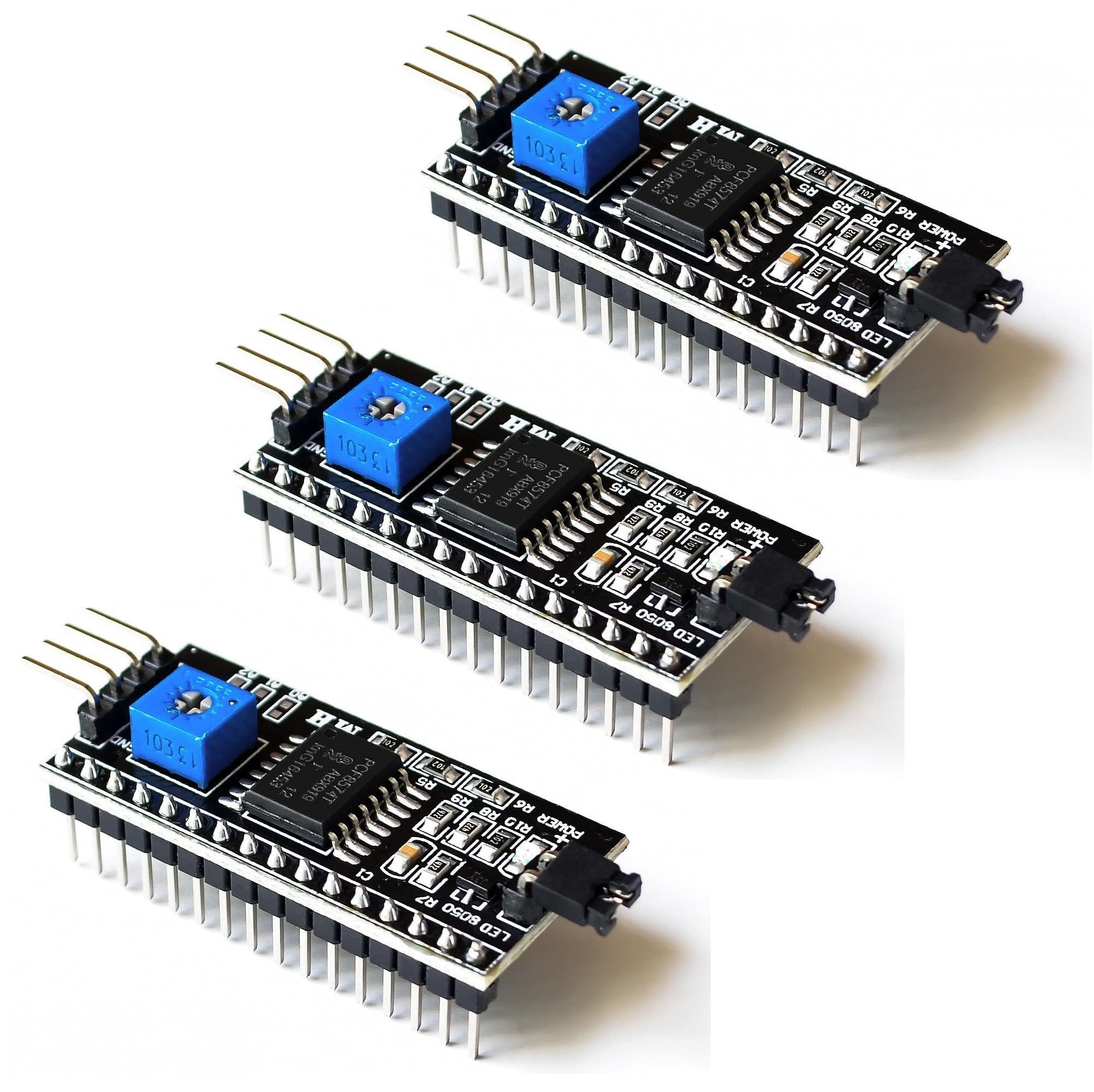
Simplify the connection of your character LCD displays to Arduino and other microcontrollers with this IIC I2C Serial Interface Adapter Module, specifically designed for 1602 (16×2) and 2004 (20×4) character LCD screens . This compact adapter reduces the number of wires needed to connect a character LCD from up to 10 pins down to just 4 pins (VCC, GND, SDA, SCL), freeing up precious I/O pins on your microcontroller for other sensors and peripherals.
In stock
CompareDescription
5V 2004 1602 LCD Display IIC I2C Adapter Module – Serial Interface Adapter for Arduino DIY Kit
Simplify the connection of your character LCD displays to Arduino and other microcontrollers with this IIC I2C Serial Interface Adapter Module, specifically designed for 1602 (16×2) and 2004 (20×4) character LCD screens . This compact adapter reduces the number of wires needed to connect a character LCD from up to 10 pins down to just 4 pins (VCC, GND, SDA, SCL), freeing up precious I/O pins on your microcontroller for other sensors and peripherals .
The adapter is based on the PCF8574 or PCF8574A I2C I/O expander chip, which converts the parallel interface of standard HD44780-compatible LCDs into a simple I2C serial interface . This makes it incredibly easy to add an LCD display to your projects without consuming most of your digital pins, and allows multiple I2C devices to share the same two-wire bus .
This module works perfectly with both 16×2 (1602) and 20×4 (2004) character LCDs, as well as other HD44780-compatible displays . The adapter features a built-in potentiometer for adjusting the LCD contrast, a jumper to enable/disable the backlight, and pull-up resistors on the I2C lines for stable communication . Compatible with 5V logic, this adapter is ideal for Arduino Uno, Mega, Nano, and other 5V microcontroller boards . Whether you’re building a weather station, a data logger, or a user interface for your project, this I2C LCD adapter makes adding a display quick and wire-efficient .
Key Features
I2C Serial Interface
Converts the parallel interface of standard character LCDs into a simple 2-wire I2C connection, reducing wiring complexity and freeing up GPIO pins on your microcontroller .
Compatible with 1602 and 2004 Displays
Works with both 16×2 and 20×4 character LCD screens based on the HD44780 driver, making it a versatile solution for a wide range of projects .
Onboard Contrast Adjustment
Includes a built-in potentiometer for easy adjustment of the LCD contrast to optimize visibility under different lighting conditions .
Backlight Control Jumper
Features a jumper that allows you to enable or disable the LCD backlight, giving you control over power consumption and visual appearance .
Onboard Pull-Up Resistors
Integrated pull-up resistors on the I2C lines (SDA and SCL) ensure stable communication without the need for external components .
Standard 2.54mm Pitch Header
The adapter features a 4-pin header (VCC, GND, SDA, SCL) with standard 2.54mm spacing for easy connection to breadboards, jumper wires, or direct soldering .
16-Pin LCD Connector
Includes a standard 16-pin female header for plugging directly onto the back of 1602 or 2004 LCD modules, creating a compact stacked assembly .
Multiple I2C Address Options
Available in variants with different I2C addresses (typically 0x27 or 0x3F), allowing multiple I2C devices to coexist on the same bus, or even multiple LCDs .
5V Logic Compatibility
Designed for 5V systems, making it ideal for use with Arduino Uno, Mega, Nano, and other 5V microcontrollers without requiring level shifters .
Easy Software Support
Fully supported by popular libraries such as LiquidCrystal_I2C and NewLiquidCrystal, making code development quick and straightforward .
Specifications
| Parameter | Value |
|---|---|
| Adapter Type | I2C Serial Interface for 1602/2004 LCD |
| I/O Expander | PCF8574 / PCF8574A |
| I2C Address | 0x27 or 0x3F (depending on chip) |
| Operating Voltage | 5V DC |
| Logic Level | 5V |
| Interface | I2C (SDA, SCL) |
| LCD Compatibility | 16×2 (1602) and 20×4 (2004) HD44780-compatible LCDs |
| Contrast Adjustment | Onboard potentiometer |
| Backlight Control | Jumper enable/disable |
| Pull-Up Resistors | Built-in on SDA and SCL lines |
| Connectors | 4-pin I2C header (2.54mm pitch), 16-pin LCD female header |
| Dimensions | Approximately 40mm x 19mm |
| Mounting | Solder directly to LCD or stack via header pins |
Pin Configuration
| Pin | Function | Description |
|---|---|---|
| VCC | Power Supply | Connect to 5V DC |
| GND | Ground | Connect to common ground |
| SDA | I2C Data | I2C data line (connect to microcontroller SDA) |
| SCL | I2C Clock | I2C clock line (connect to microcontroller SCL) |
Wiring Diagram
Arduino Connection
I2C Adapter Module          Arduino Uno
-----------------           -----------
VCC               ----->    5V
GND               ----->    GND
SDA               ----->    A4 (SDA)
SCL               ----->    A5 (SCL)
Stacking on LCD
1602/2004 LCD (Back)        I2C Adapter
-------------------         -----------
Pin 1-16 (female)           Solder adapter directly or use header pins
Installing LiquidCrystal_I2C Library
-
Open Arduino IDE
-
Go to Sketch > Include Library > Manage Libraries
-
Search for LiquidCrystal I2C by Frank de Brabander
-
Click Install
-
Alternatively, use the NewLiquidCrystal library for advanced features
Arduino Code Example
#include <Wire.h>
#include <LiquidCrystal_I2C.h>

// Set the I2C address (0x27 or 0x3F) and LCD size
LiquidCrystal_I2C lcd(0x27, 16, 2);  // For 16x2 LCD
// LiquidCrystal_I2C lcd(0x27, 20, 4); // For 20x4 LCD

void setup() {
  // Initialize the LCD
  lcd.init();
  lcd.backlight();

  // Display message
  lcd.setCursor(0, 0);
  lcd.print("Hello, World!");
  lcd.setCursor(0, 1);
  lcd.print("I2C LCD Test");
}

void loop() {
  // Scroll text example
  for (int i = 0; i < 16; i++) {
    lcd.scrollDisplayLeft();
    delay(300);
  }

  delay(2000);

  for (int i = 0; i < 16; i++) {
    lcd.scrollDisplayRight();
    delay(300);
  }

  delay(2000);
}
Adjusting Contrast
-
Power on the LCD with the adapter connected
-
Locate the small blue potentiometer on the adapter board
-
Using a small screwdriver, rotate the potentiometer clockwise or counterclockwise
-
Adjust until the characters become clearly visible against the background
-
If nothing is displayed, check wiring and I2C address
Common Applications
-
Weather stations and environmental monitors
-
Data loggers and measurement displays
-
Arduino user interfaces and menus
-
Home automation control panels
-
Clock and timer projects
-
Educational electronics kits
-
Industrial equipment displays
-
DIY instrumentation
-
Robot status displays
-
Smart home dashboards
Package Contents
-
1 x IIC I2C Serial Interface Adapter Module for 1602/2004 LCD
(Note: LCD display and jumper wires are NOT included. For use with 1602 or 2004 character LCDs.)
وحدة محول IIC I2C تسلسلي لشاشات LCD 2004 1602 – محول واجهة تسلسلي لـ Arduino DIY
بسّط توصيل شاشات LCD الخاصة بك بـ Arduino والمتحكمات الدقيقة الأخرى باستخدام وحدة محول الواجهة التسلسلي IIC I2C هذه، المصممة خصيصًا لشاشات LCD 1602 و 2004 . تقلل هذه الوحدة المدمجة عدد الأسلاك المطلوبة لتوصيل شاشة LCD من 10 دبابيس إلى 4 دبابيس فقط، مما يوفر دبابيس I/O الثمينة على المتحكم الدقيق الخاص بك لأجهزة الاستشعار والمحيطات الأخرى .
تعتمد الوحدة على شريحة توسعة I/O PCF8574 أو PCF8574A، والتي تحول الواجهة المتوازية لشاشات LCD المتوافقة مع HD44780 إلى واجهة I2C تسلسلية بسيطة . هذا يجعل من السهل إضافة شاشة LCD إلى مشاريعك دون استهلاك معظم الدبابيس الرقمية، ويسمح لأجهزة I2C متعددة بمشاركة نفس الناقل ثنائي الأسلاك .
تعمل هذه الوحدة بشكل مثالي مع كل من شاشات LCD 16×2 و 20×4، بالإضافة إلى شاشات العرض الأخرى المتوافقة مع HD44780 . تتميز الوحدة بمقياس جهد مدمج لضبط تباين LCD، ووصلة لتمكين/تعطيل الإضاءة الخلفية، ومقاومات سحب على خطوط I2C للاتصال المستقر . متوافقة مع منطق 5V، هذه الوحدة مثالية للوحات Arduino Uno و Mega و Nano وغيرها من لوحات المتحكمات الدقيقة 5V . سواء كنت تبني محطة طقس أو مسجل بيانات أو واجهة مستخدم لمشروعك، فإن محول I2C LCD هذا يجعل إضافة شاشة سريعة وموفرة للأسلاك .
المميزات الرئيسية
واجهة I2C تسلسلية
تحول الواجهة المتوازية لشاشات LCD القياسية إلى اتصال I2C بسلكين، مما يقلل تعقيد الأسلاك ويوفر دبابيس GPIO على المتحكم الدقيق الخاص بك .
توافق مع شاشات 1602 و 2004
يعمل مع كل من شاشات LCD 16×2 و 20×4 القائمة على مشغل HD44780، مما يجعله حلاً متعدد الاستخدامات لمجموعة واسعة من المشاريع .
ضبط تباين مدمج
يتضمن مقياس جهد مدمج لضبط تباين LCD بسهولة لتحسين الرؤية تحت ظروف الإضاءة المختلفة .
وصلة تحكم بالإضاءة الخلفية
يتميز بوصلة تسمح لك بتمكين أو تعطيل الإضاءة الخلفية لشاشة LCD، مما يمنحك التحكم في استهلاك الطاقة والمظهر المرئي .
مقاومات سحب مدمجة
مقاومات سحب مدمجة على خطوط I2C تضمن اتصالاً مستقرًا دون الحاجة إلى مكونات خارجية .
رأس قياسي بمسافة 2.54 مم
تتميز الوحدة برأس 4 دبابيس بمسافة قياسية 2.54 مم لسهولة التوصيل بلوحات التجارب أو أسلاك التوصيل أو اللحام المباشر .
موصل LCD بـ 16 دبوس
يتضمن رأس أنثوي قياسي 16 دبوس للتوصيل المباشر بالجزء الخلفي من وحدات LCD 1602 أو 2004، مما يخلق تجميعًا مكدسًا مضغوطًا .
خيارات عناوين I2C متعددة
متوفر بإصدارات بعناوين I2C مختلفة، مما يسمح لأجهزة I2C متعددة بالعمل على نفس الناقل، أو حتى شاشات LCD متعددة .
توافق مع منطق 5V
مصمم لأنظمة 5V، مما يجعله مثاليًا للاستخدام مع Arduino Uno و Mega و Nano وغيرها من المتحكمات الدقيقة 5V دون الحاجة إلى محولات مستوى .
دعم برمجي سهل
مدعوم بالكامل بمكتبات شائعة مثل LiquidCrystal_I2C و NewLiquidCrystal، مما يجعل تطوير الكود سريعًا ومباشرًا .
المواصفات الفنية
| المعلمة | القيمة |
|---|---|
| نوع المحول | واجهة I2C تسلسلية لشاشات 1602/2004 |
| شريحة التوسعة | PCF8574 / PCF8574A |
| عنوان I2C | 0x27 أو 0x3F |
| جهد التشغيل | 5V |
| مستوى المنطق | 5V |
| الواجهة | I2C |
| توافق LCD | 1602 و 2004 |
| ضبط التباين | مقياس جهد مدمج |
| التحكم بالإضاءة الخلفية | وصلة تمكين/تعطيل |
| الأبعاد | حوالي 40 مم × 19 مم |
تكوين الدبابيس
| الدبوس | الوظيفة |
|---|---|
| VCC | طاقة 5V |
| GND | أرضي |
| SDA | بيانات I2C |
| SCL | ساعة I2C |
التطبيقات الشائعة
-
محطات الطقس والمراقبة البيئية
-
مسجلات البيانات وشاشات القياس
-
واجهات مستخدم Arduino
-
لوحات التحكم في أتمتة المنزل
-
مشاريع الساعات والمؤقتات
-
مجموعات الإلكترونيات التعليمية
-
شاشات المعدات الصناعية
-
لوحات معلومات المنزل الذكي
محتويات العلبة
-
1 × وحدة محول IIC I2C لشاشات 1602/2004 LCD
Reviews
There are no reviews yet.