0
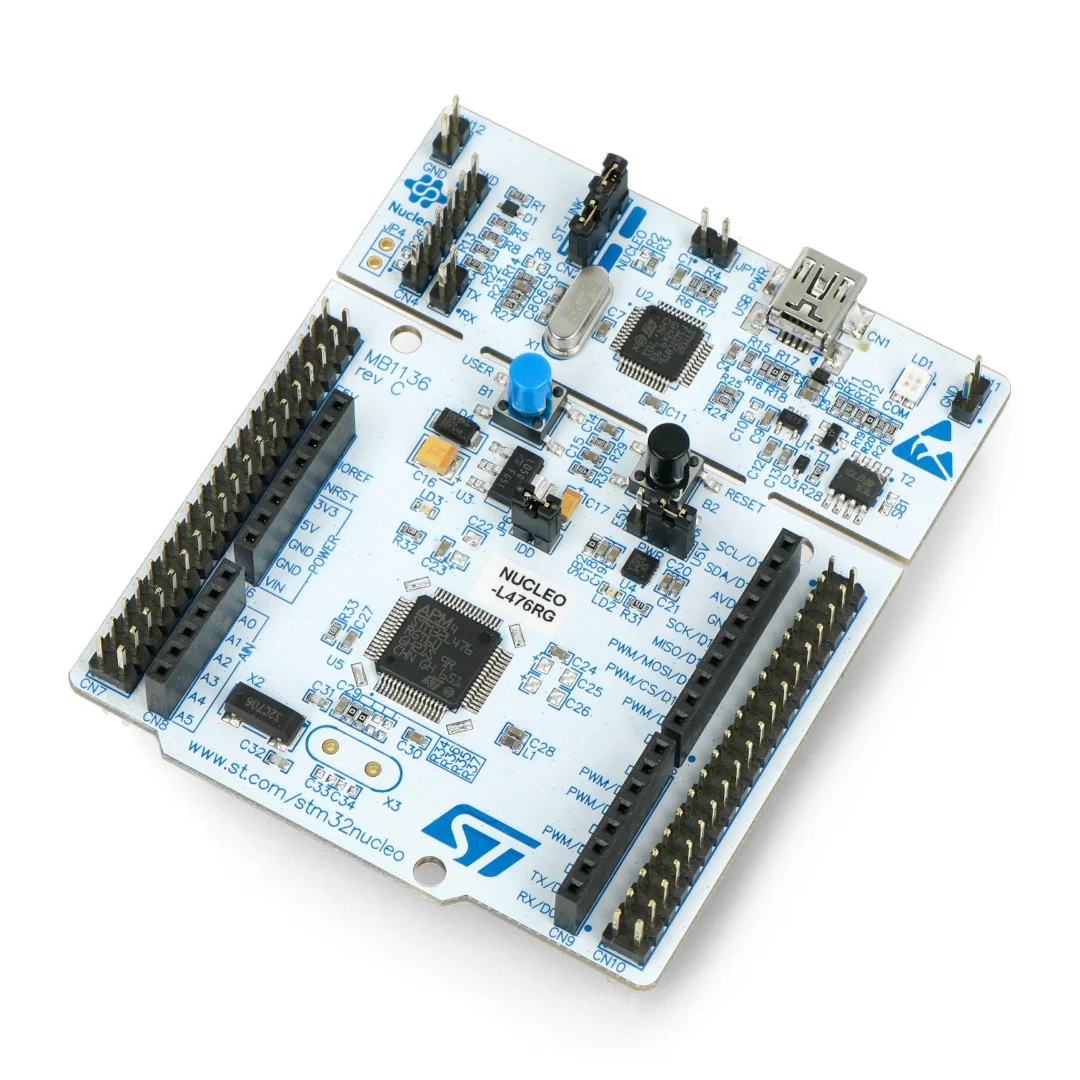
STM32 Nucleo-L476RG Development Board
60,000 د.ع
Build ultra-low-power embedded applications with the NUCLEO-L476RG Development Board, a powerful yet energy-efficient evaluation platform from STMicroelectronics featuring the STM32L476RG microcontroller. Part of the STM32 Nucleo-64 family, this board combines high performance with exceptional power efficiency, making it ideal for battery-powered applications, portable devices, and energy-conscious IoT solutions
Only 2 left in stock
CompareDescription
NUCLEO-L476RG Development Board – STM32 Nucleo-64 with ARM Cortex-M4 Ultra-Low-Power MCU
Build ultra-low-power embedded applications with the NUCLEO-L476RG Development Board, a powerful yet energy-efficient evaluation platform from STMicroelectronics featuring the STM32L476RG microcontroller. Part of the STM32 Nucleo-64 family, this board combines high performance with exceptional power efficiency, making it ideal for battery-powered applications, portable devices, and energy-conscious IoT solutions.
The board is built around the STM32L476RGT6 microcontroller, a 32-bit ARM Cortex-M4 processor with floating point unit (FPU) and Digital Signal Processing (DSP) instructions, running at up to 80 MHz. It offers 1 MB of flash memory and 128 KB of SRAM, providing ample resources for complex applications while maintaining ultra-low power consumption. The microcontroller is part of STMicroelectronics’ STM32L4 series, renowned for its best-in-class power efficiency with multiple low-power modes including a shutdown mode consuming as little as 30 nA.
A key feature of the NUCLEO-L476RG is its integrated ST-LINK/V2-1 debugger/programmer, eliminating the need for external debugging hardware. Simply connect the board to your computer via USB to program, debug, and power the board all through a single cable. The board supports multiple IDE options including IAR EWARM, Keil MDK, and STM32CubeIDE, with extensive software libraries and examples available through the STM32Cube software package.
The board features two types of expansion connectors: Arduino Uno V3 compatible headers allow you to use the vast ecosystem of Arduino shields, while ST Morpho headers provide full access to all STM32 I/O pins for maximum flexibility. Whether you’re developing battery-powered sensors, portable medical devices, or energy-harvesting IoT nodes, the NUCLEO-L476RG provides a versatile and ultra-low-power platform for your projects.
Key Features
STM32L476RG Ultra-Low-Power ARM Cortex-M4 Core
Powered by the STM32L476RGT6 microcontroller featuring a 32-bit ARM Cortex-M4 processor with FPU and DSP instructions, running at up to 80 MHz, combining high performance with exceptional power efficiency.
Ample Memory Resources
Provides 1 MB of flash memory for program storage and 128 KB of SRAM for data, offering substantial capacity for complex applications, firmware updates, and rich features.
Ultra-Low-Power Consumption
Features multiple low-power modes including sleep, stop, and shutdown modes, with power consumption as low as 30 nA in shutdown mode and 108 µA/MHz in run mode, ideal for battery-powered applications.
Integrated ST-LINK/V2-1 Debugger/Programmer
Onboard debugger/programmer with SWD connector eliminates the need for external debugging hardware. Supports USB re-enumeration for virtual COM port, mass storage, and debug port functionality.
Flexible Power Supply Options
Can be powered via USB VBUS or external sources including 3.3V, 5V, or 7-12V through the Arduino or Morpho connectors, with flexible power management access points.
Arduino Uno V3 Compatibility
Features Arduino Uno Revision 3 compatible headers, allowing you to use thousands of existing Arduino shields, sensors, and modules for rapid prototyping and expansion.
ST Morpho Extension Headers
Includes ST Morpho extension pin headers that provide full access to all STM32 I/O pins, enabling custom expansion and connection to specialized peripherals.
User and Reset Buttons
Provides two push buttons: a user-programmable button for application control and a reset button for system restart.
Three Onboard LEDs
Includes three LEDs: USB communication LED (LD1), user LED (LD2) for application status, and power LED (LD3) for board power indication.
Comprehensive Peripheral Support
Offers multiple USART, I2C, SPI interfaces, two 12-bit ADCs, two 12-bit DACs, USB OTG full-speed, multiple timers, and an LCD controller for segment displays.
Wide IDE Support
Compatible with IAR Embedded Workbench, Keil MDK, STM32CubeIDE, and GCC-based IDEs, with comprehensive software libraries and examples provided in the STM32Cube MCU software package.
Specifications
| Parameter | Value |
|---|---|
| Board Type | STM32 Nucleo-64 Development Board |
| Microcontroller | STM32L476RGT6 |
| Core Architecture | ARM Cortex-M4 with FPU and DSP |
| Clock Speed | Up to 80 MHz |
| Flash Memory | 1 MB |
| SRAM | 128 KB |
| Operating Voltage | 3.3V |
| Power Supply Options | USB VBUS, External 3.3V, 5V, or 7-12V |
| Digital I/O Pins | Up to 50 (through Morpho headers) |
| Analog Inputs | 2 x 12-bit ADC with up to 16 channels each |
| Analog Outputs | 2 x 12-bit DAC |
| Communication Interfaces | USART (3+), I2C (3+), SPI (3+), USB OTG FS |
| Timers | Advanced control, general-purpose, low-power timers, watchdog |
| LCD Controller | Integrated for segment LCD displays |
| Debugger | Integrated ST-LINK/V2-1 |
| Expansion | Arduino Uno V3, ST Morpho headers |
| User Interface | User button, Reset button, User LED (LD2) |
| Dimensions | Standard Nucleo-64 form factor |
Pin Configuration
Arduino Uno V3 Headers
The board includes Arduino Uno V3 compatible headers for easy shield compatibility:
| Header | Pins | Functions |
|---|---|---|
| Digital I/O | D0-D13 | Digital input/output, PWM, UART, SPI |
| Analog Input | A0-A5 | Analog-to-digital converter inputs |
| Power | 5V, 3.3V, GND, VIN | Power supply connections |
| ICSP | ICSP header | SPI programming interface |
ST Morpho Headers
The ST Morpho headers (CN7, CN10) provide full access to all STM32L476RG I/O pins, including additional GPIO, ADC channels, DAC outputs, and peripheral interfaces not available on Arduino headers.
Wiring Diagram
Basic Power and Programming
USB Cable (USB-A to Micro-B) -----> Board USB Port
(Provides 5V power and programming/debugging)
Connecting an I2C Sensor via Arduino Headers
NUCLEO-L476RG              I2C Sensor
---------------            ----------
3.3V or 5V    -----------> VCC
GND           -----------> GND
A4 (SDA)      -----------> SDA
A5 (SCL)      -----------> SCL
Battery-Powered Operation
3.7V Li-Po Battery -----> VIN pin (or 3.3V with regulator)
GND -----------------> GND pin
STM32CubeIDE Setup
Download and install STM32CubeIDE from STMicroelectronics website
Launch STM32CubeIDE and create a new STM32 project
Select the NUCLEO-L476RG board from the board selector
Configure project settings and peripherals using the graphical pinout and clock configuration tools
Write your application code using HAL or LL libraries
Build and flash directly to the board via the integrated ST-LINK
Arduino Code Example (Using Arduino IDE)
// Example: Blink User LED (LD2) and Read Analog Input

const int ledPin = LED_BUILTIN;  // LD2 is connected to PA5
const int analogPin = A0;         // Analog input on Arduino header

void setup() {
  pinMode(ledPin, OUTPUT);
  Serial.begin(115200);
  Serial.println("NUCLEO-L476RG Ultra-Low-Power Ready");
}

void loop() {
  // Blink LED
  digitalWrite(ledPin, HIGH);
  delay(500);
  digitalWrite(ledPin, LOW);
  delay(500);

  // Read analog sensor value
  int sensorValue = analogRead(analogPin);
  float voltage = (sensorValue / 4095.0) * 3.3;

  Serial.print("Analog Value: ");
  Serial.print(sensorValue);
  Serial.print("  Voltage: ");
  Serial.println(voltage, 3);
}
STM32CubeIDE Code Example (HAL Library with Low-Power Mode)
/* USER CODE BEGIN 0 */
#define LED_PIN GPIO_PIN_5
#define LED_PORT GPIOA

void EnterLowPowerMode(void) {
  // Configure for STOP mode with regulator in low-power mode
  HAL_PWREx_EnableUltraLowPower();
  HAL_PWREx_EnableFastWakeUp();
  HAL_PWR_EnterSTOPMode(PWR_LOWPOWERREGULATOR_ON, PWR_STOPENTRY_WFI);
  SystemClock_Config();  // Reconfigure clock after wake-up
}
/* USER CODE END 0 */

int main(void) {
  HAL_Init();
  SystemClock_Config();
  MX_GPIO_Init();
  MX_USART2_UART_Init();

  char msg[] = "NUCLEO-L476RG Running in Low-Power Mode\r\n";
  HAL_UART_Transmit(&huart2, (uint8_t*)msg, strlen(msg), 100);

  while (1) {
    HAL_GPIO_TogglePin(LED_PORT, LED_PIN);
    HAL_Delay(500);

    // Enter low-power mode for 5 seconds
    HAL_Delay(5000);
    EnterLowPowerMode();
  }
}
Key Peripheral Highlights
Ultra-Low-Power Features
Shutdown mode: 30 nA with full RAM retention
Stop mode: 130 nA with RTC
Run mode: 108 µA/MHz
Multiple wake-up sources including RTC, external interrupts, and peripherals
Analog Peripherals
12-bit ADCs with hardware oversampling for 16-bit resolution
Two 12-bit DACs for analog output generation
Operational amplifiers for signal conditioning
Comparators for low-power threshold detection
LCD Controller
Integrated segment LCD controller supporting up to 8×40 segments, ideal for portable devices with display requirements.
Security Features
True random number generator (RNG)
Hardware encryption (AES-256)
Secure boot and flash protection
Common Applications
Battery-powered IoT sensors and nodes
Portable medical devices and wearables
Energy harvesting systems
Environmental monitoring stations
Wireless sensor networks
Handheld instrumentation
Low-power data loggers
Consumer electronics with display
Educational ultra-low-power training
Package Contents
1 x NUCLEO-L476RG Development Board
لوحة تطوير NUCLEO-L476RG – STM32 Nucleo-64 مع معالج ARM Cortex-M4 منخفض الطاقة للغاية
ابنِ تطبيقات مدمجة منخفضة الطاقة للغاية باستخدام لوحة تطوير NUCLEO-L476RG، وهي منصة تقييم قوية وموفرة للطاقة من STMicroelectronics تتميز بمتحكم STM32L476RG. كجزء من عائلة STM32 Nucleo-64 الشهيرة، تجمع هذه اللوحة بين الأداء العالي وكفاءة الطاقة الاستثنائية، مما يجعلها مثالية للتطبيقات التي تعمل بالبطارية والأجهزة المحمولة وحلول إنترنت الأشياء الموفرة للطاقة.
تم بناء اللوحة حول متحكم STM32L476RGT6، وهو معالج ARM Cortex-M4 32 بت مع وحدة فاصلة عائمة وتعليمات معالجة الإشارات الرقمية، يعمل بتردد يصل إلى 80 ميجاهرتز. يوفر 1 ميجابايت من ذاكرة الفلاش و 128 كيلوبايت من ذاكرة الوصول العشوائي، مما يوفر موارد وفيرة للتطبيقات المعقدة مع الحفاظ على استهلاك طاقة منخفض للغاية. المتحكم هو جزء من سلسلة STM32L4 من STMicroelectronics، المشهورة بكفاءة الطاقة المتميزة مع أوضاع طاقة منخفضة متعددة بما في ذلك وضع الإغلاق الذي يستهلك 30 نانو أمبير فقط.
الميزة الرئيسية للوحة NUCLEO-L476RG هي مبرمج/مصحح ST-LINK/V2-1 المدمج، مما يلغي الحاجة إلى أجهزة تصحيح خارجية. ما عليك سوى توصيل اللوحة بجهاز الكمبيوتر الخاص بك عبر USB لبرمجة وتصحيح وتشغيل اللوحة كل ذلك من خلال كابل واحد. تدعم اللوحة خيارات IDE متعددة بما في ذلك IAR EWARM و Keil MDK و STM32CubeIDE، مع مكتبات برمجية وأمثلة واسعة متوفرة عبر حزمة برامج STM32Cube.
تتميز اللوحة بنوعين من موصلات التوسعة: رؤوس متوافقة مع Arduino Uno V3 تسمح لك باستخدام النظام البيئي الواسع لدروع Arduino، بينما توفر رؤوس ST Morpho وصولاً كاملاً لجميع دبابيس الإدخال/الإخراج STM32 لأقصى مرونة. سواء كنت تطور أجهزة استشعار تعمل بالبطارية أو أجهزة طبية محمولة أو عقد إنترنت الأشياء التي تحصد الطاقة، فإن NUCLEO-L476RG توفر منصة متعددة الاستخدامات ومنخفضة الطاقة للغاية لمشاريعك.
المميزات الرئيسية
معالج STM32L476RG ARM Cortex-M4 منخفض الطاقة للغاية
مدعوم بمتحكم STM32L476RGT6 الذي يتميز بمعالج ARM Cortex-M4 32 بت مع FPU وتعليمات DSP، يعمل بتردد يصل إلى 80 ميجاهرتز، يجمع بين الأداء العالي وكفاءة الطاقة الاستثنائية.
موارد ذاكرة وفيرة
يوفر 1 ميجابايت من ذاكرة الفلاش لتخزين البرامج و 128 كيلوبايت من ذاكرة الوصول العشوائي للبيانات، مما يوفر سعة كبيرة للتطبيقات المعقدة وتحديثات البرامج الثابتة والميزات الغنية.
استهلاك طاقة منخفض للغاية
يتميز بأوضاع طاقة منخفضة متعددة بما في ذلك أوضاع السكون والإيقاف والإغلاق، مع استهلاك طاقة يصل إلى 30 نانو أمبير في وضع الإغلاق و 108 ميكروأمبير/ميجاهرتز في وضع التشغيل، مثالي للتطبيقات التي تعمل بالبطارية.
مبرمج/مصحح ST-LINK/V2-1 مدمج
مبرمج/مصحح مدمج مع موصل SWD يلغي الحاجة إلى أجهزة تصحيح خارجية. يدعم إعادة تعداد USB لمنفذ COM افتراضي وتخزين كبير ومنفذ تصحيح.
خيارات طاقة مرنة
يمكن تشغيلها عبر USB VBUS أو مصادر خارجية بما في ذلك 3.3V أو 5V أو 7-12V من خلال موصلات Arduino أو Morpho، مع نقاط وصول لإدارة الطاقة المرنة.
توافق مع Arduino Uno V3
تتميز برؤوس متوافقة مع Arduino Uno Revision 3، مما يسمح لك باستخدام آلاف الدروع وأجهزة الاستشعار والوحدات الحالية للنمذجة الأولية السريعة والتوسع.
رؤوس توسعة ST Morpho
تتضمن رؤوس توسعة ST Morpho التي توفر وصولاً كاملاً لجميع دبابيس الإدخال/الإخراج STM32، مما يتيح توسعة مخصصة والتوصيل بمحيطات متخصصة.
أزرار مستخدم وإعادة ضبط
توفر زرين ضغط: زر قابل للبرمجة للمستخدم للتحكم في التطبيق وزر إعادة ضبط لإعادة تشغيل النظام.
ثلاثة مصابيح LED مدمجة
تتضمن ثلاثة مصابيح LED: مصباح اتصال USB (LD1)، مصباح مستخدم (LD2) لحالة التطبيق، ومصباح طاقة (LD3) لتشغيل اللوحة.
دعم محيطي شامل
يقدم واجهات USART و I2C و SPI متعددة، ومحولي ADC 12 بت، ومحولي DAC 12 بت، واتصال USB OTG كامل السرعة، ومؤقتات متعددة، ووحدة تحكم LCD لشاشات الأجزاء.
دعم واسع لبيئات التطوير
متوافق مع IAR Embedded Workbench و Keil MDK و STM32CubeIDE وبيئات التطوير القائمة على GCC، مع مكتبات برمجية وأمثلة شاملة مقدمة في حزمة برامج STM32Cube.
المواصفات الفنية
| المعلمة | القيمة |
|---|---|
| نوع اللوحة | STM32 Nucleo-64 |
| المتحكم | STM32L476RGT6 |
| بنية النواة | ARM Cortex-M4 مع FPU و DSP |
| تردد الساعة | حتى 80 ميجاهرتز |
| ذاكرة الفلاش | 1 ميجابايت |
| ذاكرة الوصول العشوائي | 128 كيلوبايت |
| جهد التشغيل | 3.3V |
| خيارات الطاقة | USB VBUS، 3.3V خارجي، 5V، 7-12V |
| دبابيس الإدخال/الإخراج الرقمية | حتى 50 |
| المدخلات التماثلية | 2 × ADC 12 بت |
| المخرجات التماثلية | 2 × DAC 12 بت |
| واجهات الاتصال | USART (3+), I2C (3+), SPI (3+), USB OTG FS |
| المؤقتات | تحكم متقدم، أغراض عامة، منخفض الطاقة، مراقبة |
| وحدة تحكم LCD | مدمجة لشاشات LCD القطاعية |
| المصحح | ST-LINK/V2-1 مدمج |
| التوسعة | Arduino Uno V3، ST Morpho |
| واجهة المستخدم | زر مستخدم، زر إعادة ضبط، مصباح مستخدم |
| الأبعاد | عامل شكل Nucleo-64 القياسي |
التطبيقات الشائعة
أجهزة استشعار إنترنت الأشياء التي تعمل بالبطارية
الأجهزة الطبية المحمولة والأجهزة القابلة للارتداء
أنظمة حصاد الطاقة
محطات المراقبة البيئية
شبكات الاستشعار اللاسلكية
أجهزة القياس المحمولة
مسجلات البيانات منخفضة الطاقة
التدريب على الطاقة المنخفضة للغاية
محتويات العلبة
1 × لوحة تطوير NUCLEO-L476RG


Reviews
There are no reviews yet